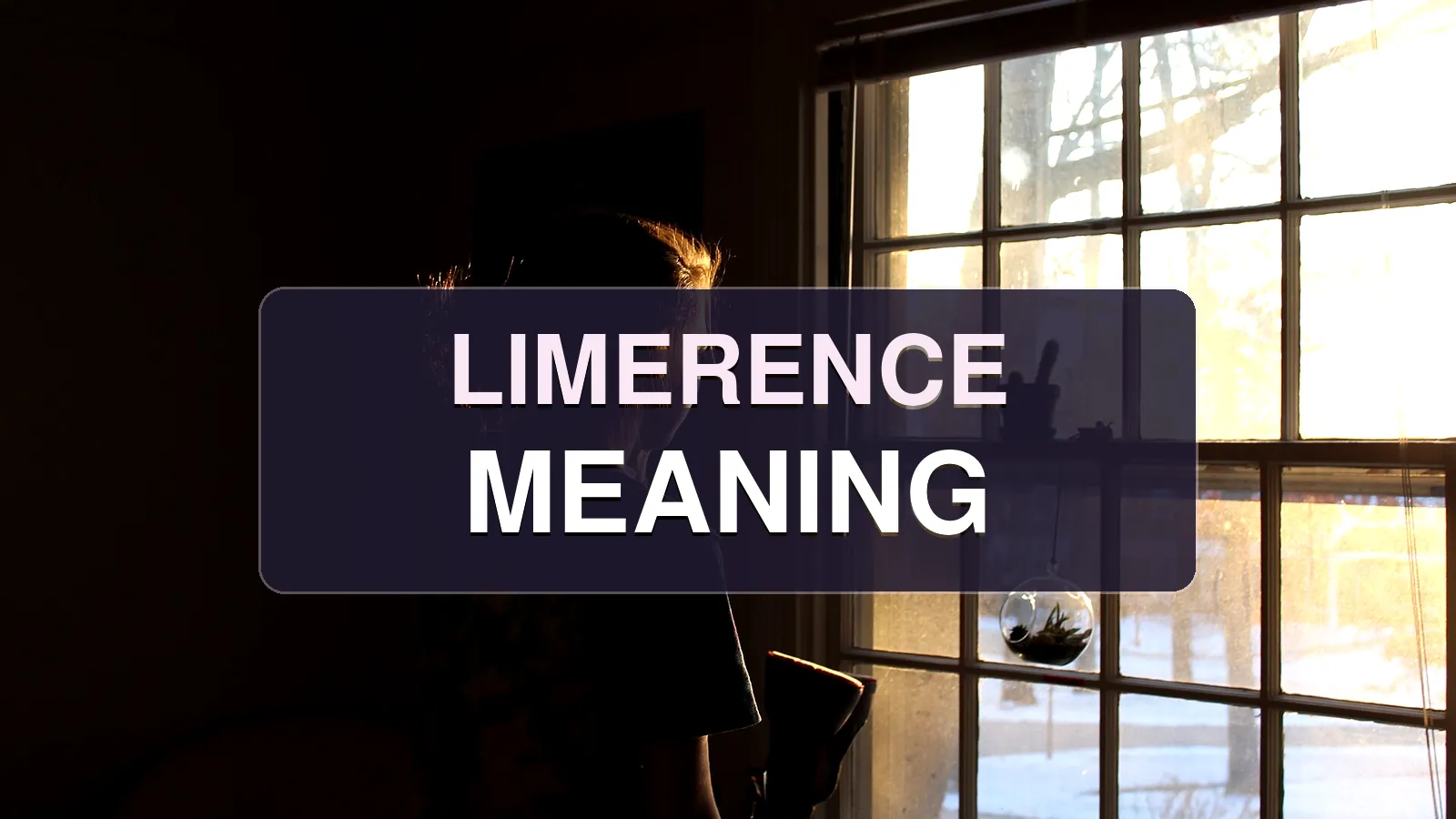
Limerence Meaning: Signs, Examples, and Crush vs Love
Limerence meaning is that strangely powerful kind of romantic fixation where one person’s text can brighten your whole day—and their silence can make you check your phone again and again. You may barely know them, yet your imagination has written three seasons of your love story. Is that a crush, anxiety, or the beginning of a real relationship? The difference often lies in how much uncertainty, fantasy, and need for a response take over your thoughts.
Quick answer: The simplest limerence meaning is an intense, sometimes involuntary romantic preoccupation with one person, often involving idealization, repeated thoughts, and a strong wish for the feelings to be returned. A crush may feel similar, but limerence can be harder to switch off, particularly when interest is unclear. It’s a descriptive concept, not a stand-alone mental-health diagnosis.
Limerence Meaning: When a Crush Takes Over Your Thoughts
Imagine you meet someone at a party. They laugh at a joke and message you the next day. Lovely! Now you’re rereading those words, imagining your future, and feeling deflated when they don’t reply by lunch. The feelings may be much bigger than the relationship itself.
The word limerence was introduced by psychologist Dorothy Tennov, whose work on romantic attraction became influential in 1979. The APA Dictionary of Psychology describes intense desire, heightened concern for a romantic interest, and sensitivity to how that person responds. In everyday language, limerence meaning often centers on wanting reciprocation so intensely that small signs start feeling enormous.
Researchers sometimes call the person a limerent object. That’s shorthand, not a friendly way to describe a real person. They still have preferences and boundaries outside your story.
The interesting part isn’t excitement itself, but what it does to your attention. Can you still enjoy your friends, work, and ordinary plans? Or does one ambiguous message keep rewriting the mood of your whole afternoon?

Five Signs That the Feeling Has Become All-Consuming
If you searched for limerence meaning, these are the everyday patterns worth noticing.
Your mind keeps looping. You replay conversations, check a profile, or imagine your next meeting. Sometimes it steals time from other plans. Limerence meaning becomes more relevant when thoughts feel intrusive rather than merely delightful.
A reply seems to decide your mood. One emoji brings relief; silence sparks a dozen explanations. Uncertainty becomes the main event.
The imagined person grows faster than the connection. You picture trips or commitment that haven’t happened, instead of learning their values over time. Perhaps you know their favorite music but not whether you want the same kind of relationship.
You search for clues everywhere. A song or glance feels meaningful. Is it something they said directly, or your interpretation?
Other parts of life get squeezed. You skip sleep to check updates, cancel plans, or lose focus. That impact matters more than ticking a certain number of boxes. In a 2025 peer-reviewed study, researchers developed an 11-item questionnaire for studying limerence and identified dimensions relating to intense attachment needs and neglect of oneself or others. The research tool was not a diagnostic shortcut for an individual reader.
Mixed expectations can intensify longing. Our situationship meaning guide explains the different problem of a relationship that lacks an agreed label. Unclear arrangements can be confusing without automatically being limerence.
Limerence vs. a Crush, Attachment, and Real Love
The limerence meaning becomes clearer when you put similar experiences side by side.
A crush can be exciting. Anxious attachment can involve fear of disconnection. Limerence focuses on preoccupation with one person and a wish for reciprocation. Mutual love also involves knowing each other as real people.
| Experience | What may stand out | Question worth asking |
|---|---|---|
| Ordinary crush | Excitement, attraction, and curiosity | Can I enjoy the feeling without losing my routine? |
| Limerent preoccupation | Repeated fantasies and sensitivity to uncertain signals | Am I attached to the person or to a hoped-for response? |
| Anxious attachment | Fear of disconnection that may appear across relationships | Is this worry a broader pattern, rather than about one person? |
| Mutual love | Reciprocal care, reality-based knowledge, and respected boundaries | Do we both show interest through consistent actions? |
These patterns can overlap; attraction and rejection fears may coexist. But limerence is not a synonym for anxious attachment, and a crush alone isn’t evidence of a harmful pattern.
The Cleveland Clinic contrasts limerence with shared experience and mutual respect. Healthy love needn’t feel boring. It’s about whether two people can be honest, say no, and still remain separate individuals.
For another distinction, our love bombing meaning article covers something different: overwhelming affection used in ways that may create pressure. One concerns internal preoccupation; the other concerns observable behavior.
You can also read our Arabic guide to early signs of emotional attachment. It discusses how attachment may affect behavior without using limerence as a catch-all label.
Why Uncertainty Can Make the Story Feel Bigger
A clear answer may disappoint, but uncertainty invites endless possibilities. “They were sweet yesterday, distant today—what does it mean?” The maybe can become more consuming than real contact.
Stories about destined relationships can appeal to someone facing romantic uncertainty. The red string of fate meaning belongs to folklore, not evidence that a particular crush will become a lasting partnership. Compare the story with the other person’s actions.
Limerence meaning isn’t that all uncertain attraction is unhealthy. The stronger issue is when thoughts become repetitive and difficult to disengage from. A single missed reply shouldn’t be treated as a scientific measurement of somebody’s feelings. Consider direct communication and consistent actions.
It can help to separate three columns in your head: facts, guesses, and wishes. “They invited me for coffee” is a fact. “They must be secretly in love with me” is a guess. “I hope this becomes something mutual” is a wish. None of these statements deserves to masquerade as another.
Researchers are still investigating romantic preoccupation. The 2025 study tested a questionnaire in two samples of people who had experienced limerence. It doesn’t establish a universal cause or duration.
It may be a passing crush or a difficult period of uncertainty. Perhaps you need a more honest conversation—or time to return your attention to the rest of your life. Limerence meaning should give you language for reflection, not take over the story for you.
Explore Your Pattern and Find a Respectful Next Step
The explorer asks what you’re doing, how it affects your day, and what might help. Its illustration and prompts change. Try “I replay every conversation,” then switch to “We know each other in real life.” Notice how different the questions become.
Is it a crush, uncertainty, or intense preoccupation?
Explore a few situations. The illustration, reflective question, and next step change with your choices.
What do you know from what they actually said, and what have you filled in yourself?
A perspective to exploreYou do not need an instant label. Notice how the experience changes over several ordinary days.
One possible next stepSpend time with friends, a task, or a hobby that was part of your life before this preoccupation.
There are no scores or predictions; use the prompts for reflection, not to label somebody.
Try a phone-checking break, see a friend, or ask one respectful question when appropriate. If somebody has declined contact, respect that boundary rather than trying to decode a hidden yes. Your feelings deserve care; the other person’s choice deserves respect too.
For perspective on what steady care looks like, our Arabic comparison of love and attachment explores how mutual respect differs from relying on one person for every emotional need. Visit the Relationships section for more communication and boundary guides.

If the thoughts disrupt sleep or everyday life, consider a mental-health professional. You don’t need a label to seek support—or to enjoy a passing crush.
Frequently Asked Questions About Limerence
Does limerence mean someone is in love?
Not necessarily. The attraction can feel huge, but love generally involves knowing another person, noticing their actual needs, and developing mutual care. Intensity alone cannot tell you whether a stable relationship exists. Consider how both people behave, not just how much you think about them.
How is limerence different from a regular crush?
A crush can include daydreaming and nervous anticipation. Limerent preoccupation often includes more persistent thought loops, uncertainty about reciprocation, and strong reactions to small signals. These features exist on a continuum, so a single exciting week doesn’t sort people into neat categories.
Can limerence happen when someone likes you back?
It can. The concept focuses on preoccupation and sensitivity to reciprocation, not a requirement that feelings always be one-sided. If communication becomes clearer and a real relationship develops, the experience may change. That doesn’t mean every intense relationship must follow a fixed sequence.
Is limerence an official mental-health diagnosis?
No. Researchers use the term to describe a form of romantic preoccupation, and some studies examine cases that cause significant impairment. It is not a stand-alone diagnosis in standard psychiatric classification systems. If your wellbeing is affected, a professional can explore what is happening without relying on an internet label.
How do I stop checking their messages constantly?
Try a realistic boundary, such as checking at planned times, turning off nonessential notifications, or doing an activity away from your phone. If appropriate, ask directly about expectations rather than chasing hints. The goal isn’t to shame yourself for caring; it’s to protect your attention and choices.
The Takeaway: Keep the Person Real and Your Life Yours
Limerence meaning describes a powerful mix of attraction, longing, and preoccupation that can make uncertainty feel unusually important. It isn’t simply another word for love, attachment, or a crush. What helps most is looking at real interactions alongside the imagined story, then keeping room for your own plans, friendships, sleep, and boundaries. A caring relationship grows through mutual choices, not endless detective work over a three-word text. If the longing feels unmanageable, support is available; if it’s a passing crush, you can enjoy it without letting it run the whole show.
Photo credits: Cover by Kate Williams (CC0), adapted with an English headline. First interior photo by Frank McKenna (CC0); second interior photo by Wu Yi (CC0). Interior photographs are cropped and optimized as WebP without added text.
For a related guide, read Future Faking Meaning: Promises vs Actions Checklist.
For a related guide, read Negging Meaning: Examples and Response Comparison Guide.