
Left on Read Meaning: What It Means in Texting
The left on read meaning in texting is simple: someone viewed your message, the app showed a read receipt, and no reply followed. People use the phrase in texts and on social media. However, it does not explain why the person did not answer.
Left on read meaning in texting
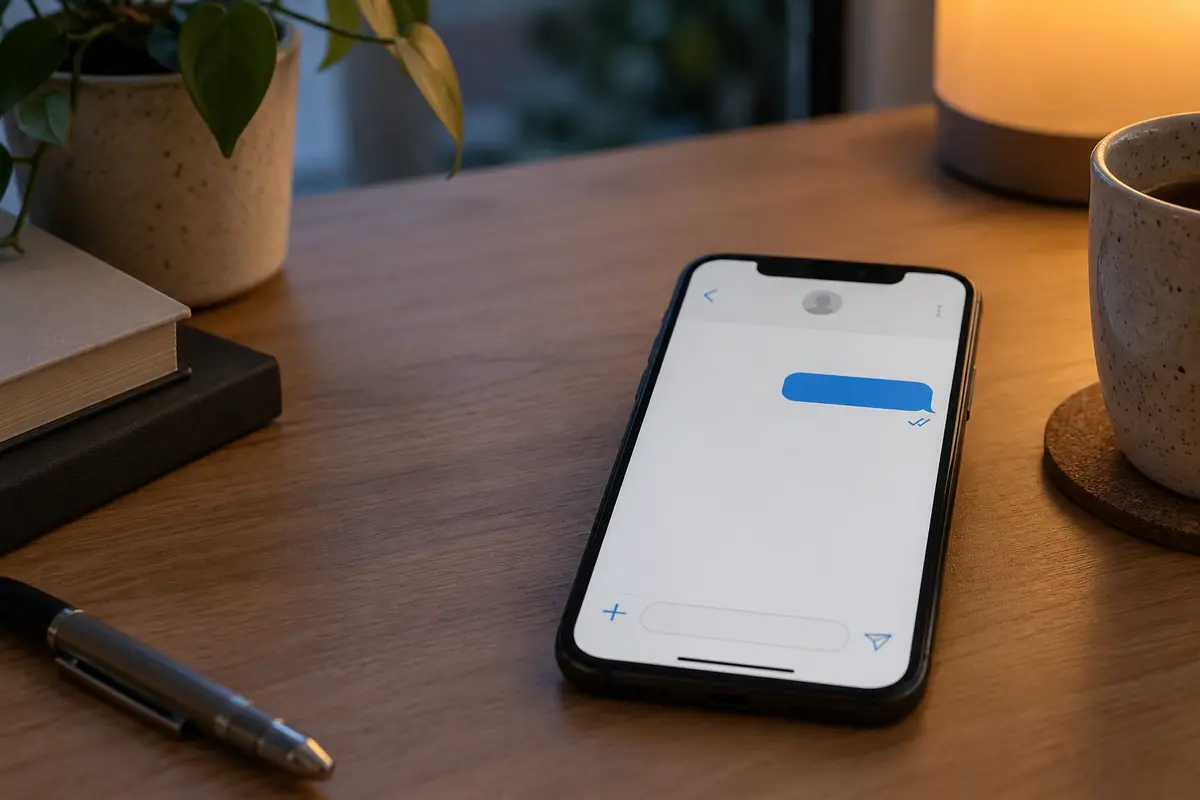
If you send a message and the app changes its status from “Delivered” to “Read” or “Seen,” but no reply comes back, the phrase applies. This left on read meaning describes what the app shows, not the recipient’s intentions.
Dictionary.com describes the slang expression as a situation where a recipient has read a message but has not responded. The emotional implication is often that the sender feels ignored, but the read receipt itself only reports that the recipient opened or viewed the message on a system that supports that feature.
What does “Read” actually tell you?
Messaging apps can report technical states, but those states are easy to over-interpret.
Apple explains that when a recipient enables iMessage read receipts, the sender sees “Read” after the recipient sees the message; otherwise they may see “Delivered.” Users can also turn off read receipts for everyone or for individual contacts.
WhatsApp uses a different visual system: one gray check indicates sent, two gray checks indicate delivered, and two blue checks usually indicate read. WhatsApp also lists several reasons a read indicator may be unavailable, including privacy settings and connection conditions.
The important distinction is simple: a messaging status can tell you something about the message. It cannot reliably tell you the recipient’s motive, mood, feelings, or relationship intentions.
Left on read vs. left on delivered
These phrases describe different message states:
| Phrase | What it usually means | What you can actually know |
|---|---|---|
| Left on read | The app marked the message as read or seen, but no reply came. | The app reported that the recipient viewed the message under its read-receipt rules. |
| Left on delivered | The app reported delivery, but did not mark the message as read. | The message reached the recipient’s device or account under the app’s delivery rules. |
Neither status tells you with certainty whether someone is interested, angry, busy, overwhelmed, distracted, or deliberately avoiding the conversation.
Why might someone leave you on read?
There are many ordinary possibilities:
- They opened the message while busy and planned to answer later.
- They needed time to think about the response.
- The message did not seem to require an answer.
- They forgot after reading it.
- They were switching between tasks or conversations.
- They did not know what to say.
- They intentionally chose not to continue the conversation.
The last possibility is real, but it is only one possibility. Context and repeated behavior are more informative than a single read receipt.
Does being left on read mean someone is not interested?
Not by itself. In dating, it is tempting to use one unanswered message as a verdict on the entire relationship. That turns a small amount of data into a very large conclusion.
If someone repeatedly reads messages without replying, avoids plans, gives no explanation, and makes little effort over time, the broader pattern may tell you that communication is not working for you. But one read receipt cannot diagnose interest or intention.
Is being left on read the same as ghosting?
No. Being left on read describes a single message state. Ghosting usually describes a broader pattern in which a person stops communicating without explanation after an established interaction or relationship.
A person can leave one message on read and reply later. That is not automatically ghosting. The time frame, the relationship, prior expectations, and whether communication actually stops all matter.
How long is “too long” to be left on read?
There is no universal number of minutes or hours. Expectations differ between friends, partners, coworkers, family members, and new dating conversations. Urgent logistics are different from a meme or casual check-in.
Instead of using a rigid timer, ask what the message was, whether you actually needed a response, and what normal communication looks like between the two of you.
What should you do after being left on read?
If the message matters, a calm follow-up is usually more useful than guessing. You can send a second message when there is a practical reason to do so, especially if time has passed or plans depend on an answer.
For example:
- “Just checking whether tomorrow still works for you.”
- “No rush—when you have a chance, let me know what you think.”
- “I need to confirm by 5, so I’ll make another plan if I don’t hear back.”
If unanswered messages become a repeated pattern that bothers you, the useful question is not “What secret message is this sending?” but “Does this communication pattern work for me?”
Why “left on read” feels bigger than it looks
Read receipts remove one kind of uncertainty—whether someone saw a message—while creating another: why there is no reply. That gap encourages people to fill in the reason themselves.
The phrase is still culturally current. Common Sense Media discussed “left on read” in 2026 as a familiar expression among tweens, where an unanswered seen message can carry strong social meaning. That social feeling is real even when the technical status cannot explain the recipient’s intention.
Where did the phrase “left on read” come from?
The expression developed alongside messaging systems that show read receipts. Dictionary.com traces online use of “left on read” to at least 2016, after read-receipt features had already become familiar on messaging platforms.
The phrase turns the interface label—“Read”—into a social action: someone did not just fail to answer; in the speaker’s framing, they “left” the other person there.
Frequently asked questions
What does it mean if a guy or girl leaves you on read?
It means the app marked your message as read and no reply has followed yet. Gender does not change what the status technically means, and the status alone cannot reveal romantic interest.
Is it rude to leave someone on read?
It can feel rude when you clearly expect a reply, especially for plans or important questions. But many casual messages do not require immediate responses, so context matters.
What is worse: left on read or delivered?
Neither is objectively worse. “Read” indicates that someone viewed the message; “delivered” does not. The emotional reaction depends on expectations and context.
Should I double text after being left on read?
A second message is not automatically a mistake. If you have a practical reason to follow up, keep it clear and low-pressure rather than using rigid dating rules.
For explanations of online expressions and messaging terms, explore our Digital Meanings section.