
Breadcrumbing Meaning in Dating: Signs, Examples, and Context
Breadcrumbing meaning dating is shorthand for a pattern in which someone offers small, intermittent signs of romantic interest without consistently moving the connection forward. The “breadcrumbs” may be a flirty message, a reaction to a story, an affectionate check-in, or talk of meeting that never becomes a clear plan.
The term describes a communication pattern. It cannot prove why a person behaves that way, whether the behavior is deliberate, or what diagnosis or attachment style they may have. The most useful evidence is the repeated gap between attention and follow-through.
Breadcrumbing meaning dating at a glance
| Pattern | What you can observe | What it does not prove |
|---|---|---|
| Breadcrumbing | Occasional attention continues, but plans and clarity do not develop | A specific motive or personality trait |
| Slow but genuine dating | Communication may be limited, yet expectations and plans are clear | That the person must increase contact immediately |
| Ghosting | Communication stops without explanation | Why the person disappeared |
| Ordinary inconsistency | A short disruption follows work, travel, illness, or another stated reason | A stable pattern from one episode |
The central distinction is not message frequency alone. Breadcrumbing usually combines recurring signals of interest with a lack of concrete, reliable progress. If the bigger question is whether either of you has defined the relationship, our situationship meaning guide explains how to discuss expectations without confusing an unlabeled connection with breadcrumbing.
What breadcrumbing can look like
One common example is a person who sends a warm message after several days of silence, suggests meeting “soon,” and then avoids choosing a date. Another is someone who reacts to posts or sends compliments whenever contact begins to fade, but rarely participates in a sustained conversation.
The pattern can also happen inside an established relationship. Promises of change or connection may appear briefly after distance or conflict, then disappear without action. Outside dating, people sometimes use the word for inconsistent attention in friendships, family relationships, or work, although the romantic meaning is the most familiar.
A single delayed reply is not breadcrumbing. Neither is a busy week that someone explains directly. Look for repetition across time: renewed attention, raised expectations, little follow-through, and another period of distance.

Breadcrumbing versus genuine slow dating
Moving slowly can be a reasonable shared choice. Someone may prefer fewer messages, need time before exclusivity, or have limited availability. The difference is whether their words and actions remain understandable and reasonably consistent.
Genuine slow dating can include a clear sentence such as, “I can meet every other weekend, and I am interested in continuing to get to know you.” Plans may be less frequent, but they are specific and usually honored. Breadcrumbing tends to preserve possibility without providing that clarity.
Do not use a rigid texting schedule as a test. People communicate differently. Instead, compare what was said with what actually happened. A slow pace still has a pace; an indefinite promise without movement does not.
Breadcrumbing versus ghosting, orbiting, and benching
Ghosting is the unexplained end of communication. Breadcrumbing keeps communication alive in small bursts. A person who breadcrumbs may disappear temporarily, but returns with enough direct attention to restart hope or interest.
Breadcrumbing involves occasional signals of interest; by contrast, love bombing meaning and warning signs explains how overwhelming attention at the beginning of a relationship may turn into pressure on personal boundaries.
Orbiting usually involves passive social media visibility after direct contact has stopped, such as watching stories without sending a message. Breadcrumbing includes direct signals, even if they are minimal or inconsistent. Benching is commonly used when someone appears to keep another person available as a backup while pursuing other options; that motive cannot be assumed from sparse messages alone.
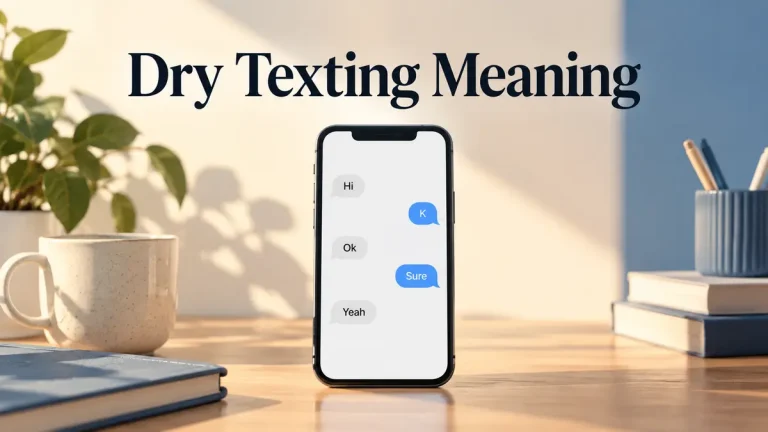
Related message labels describe narrower observations. Dry texting refers to brief or low-detail replies, while double texting means sending another message before receiving a response. Being left on delivered describes a technical message status. None of these, by itself, proves breadcrumbing.
Observable signs without guessing motives
Useful signs are behavioral and repeated. They may include affectionate messages that arrive mainly after you step back, invitations that remain vague, cancellations without a new plan, or conversations that repeatedly create momentum and then stop.
Future-oriented statements can also form part of the pattern when they never become specific: “We should travel together,” “I will take you there someday,” or “Things will be different soon.” The issue is not optimism. It is a repeated failure to connect words with practical action.
Keep the description neutral: “We have discussed meeting four times, but no date was confirmed” is stronger evidence than “They are manipulating me.” Intentional manipulation is possible, but it is not the only explanation. Avoiding an unsupported motive helps you choose a boundary based on facts.
What research can and cannot say
A 2020 cross-sectional study of 626 adults examined self-reported experiences of ghosting and breadcrumbing alongside life satisfaction, loneliness, and helplessness. Participants who reported breadcrumbing, or breadcrumbing combined with ghosting, also reported less life satisfaction and more helplessness and loneliness in that sample. The peer-reviewed study was preliminary and observational, so it cannot show that breadcrumbing caused those outcomes or predict how any individual will feel.
Researchers have also developed a questionnaire to study breadcrumbing behavior in adolescent affective-sexual relationships. The BREAD-ASR validation paper treats breadcrumbing as repeated, sporadic, noncommittal online communication intended to keep another person’s interest. A research definition helps measure a pattern; it still does not let an outsider infer intention from one message.
The evidence therefore supports careful language. You can notice inconsistency and its effect on you without diagnosing the other person or claiming that every sporadic conversation has the same cause.
How to respond to breadcrumbing
First decide what you actually want: a confirmed date, more consistent communication, exclusivity, or simply an honest answer about interest. Then ask one clear question. For example: “I enjoy talking with you, but our plans have stayed vague. Would you like to choose a day this week?”
A specific question makes follow-through visible. A clear answer followed by a real plan provides new information. Another vague promise, subject change, or disappearance also provides information, even if it does not explain the person’s motive.
Planned Parenthood’s explanation recommends recognizing the mismatch between small signs of attention and a lack of commitment. The practical response is not to win more breadcrumbs; it is to decide whether the available relationship meets your needs.
If you want to end the cycle, state a boundary rather than an accusation: “I am looking for plans we can confirm. If that is not what you want, I will step back.” You can mute, unfollow, or stop replying if recurring notifications keep reopening an unproductive conversation. Blocking is appropriate when you want no further contact or when the behavior becomes intrusive.
When the label may not fit
Do not apply the label to every uneven conversation. Illness, caregiving, travel, deadlines, grief, limited phone access, or different communication habits can interrupt contact. A person who explains the constraint and follows through later is giving you more information than the word breadcrumbing captures.
The label may also be unhelpful when neither person discussed expectations. Two people can have different ideas about whether they are casually chatting, actively dating, or building a relationship. A direct question can reveal that mismatch without assigning bad intent.
The practical breadcrumbing meaning dating takeaway is simple: pay attention to the pattern between attention and action. You do not need certainty about another person’s inner reason to ask for clarity or choose a more consistent connection.
Frequently asked questions
What does breadcrumbing mean in dating?
It means giving someone occasional signs of romantic interest without consistent follow-through or clear progress toward a relationship. The term describes the pattern, not a proven motive.
What is an example of breadcrumbing?
A person may send flirty messages after periods of silence and repeatedly suggest meeting, but avoid confirming a date. One missed plan is not enough; repetition and lack of clarity matter.
How is breadcrumbing different from ghosting?
Ghosting stops communication. Breadcrumbing keeps a small amount of direct communication going, often enough to maintain interest while the connection remains unclear.
Should I confront someone who is breadcrumbing me?
You can ask a calm, specific question about the next step and state what you need. Focus on observable behavior and your boundary rather than claiming to know the person’s intention.
Sources
- International Journal of Environmental Research and Public Health: Psychological correlates of ghosting and breadcrumbing
- Frontiers in Psychology: Development and validation of the BREAD-ASR questionnaire
- BMC Psychology: Attachment insecurity and breadcrumbing engagement in young adults
- Psychology Today: Breadcrumbing overview
- Planned Parenthood: What is breadcrumbing?
Intermittent attention can continue without commitment; zombieing dating meaning describes the distinct pattern of returning after a period of ghosting.
Intermittent signals can prolong uncertainty, while the difference between ghosting and no contact separates unexplained disappearance from a deliberate communication boundary.