Owl Symbolism: Wisdom, Night, and Meanings Across Cultures
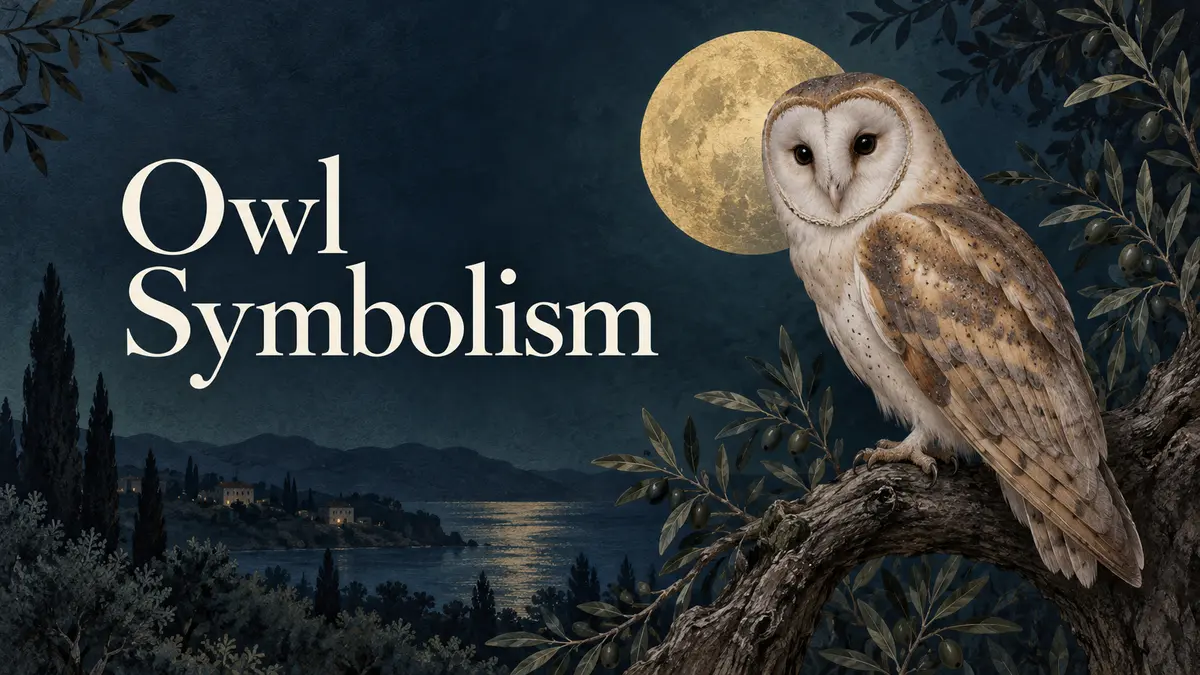
Owl symbolism often brings together wisdom, watchfulness, night, and mystery. Yet an owl does not carry one fixed message everywhere. An Athenian coin, a scene in Shakespeare, and a modern tattoo use the same bird in different ways. The meaning comes from the setting and the people telling the story, not from a rule that every encounter predicts something.
If you have seen or heard an owl, you can enjoy the moment without treating it as a warning. This guide separates documented cultural examples from personal interpretations and the behavior of living birds.
Owl symbolism at a glance
The most useful starting point is to ask where the image appears. A bird beside a goddess belongs to a different symbolic language from an owl calling during a murder scene. These examples offer a guide to context, not a universal dictionary.
| Context | Possible meaning | Important limit |
|---|---|---|
| Ancient Athenian imagery | Athena, civic identity, and an association with wisdom | A specific historical tradition, not every culture’s belief |
| Macbeth’s night scene | Dread and the atmosphere surrounding a death | A literary use of sound, not a prediction about real owls |
| A personal emblem or tattoo | Learning, attentiveness, or comfort with uncertainty | The wearer or artist chooses the interpretation |
| A wildlife encounter | A memorable moment in nature | Species and circumstances matter before symbolism |
Why owl symbolism is linked with wisdom
A well-documented historical connection is Athena, the Greek goddess associated with wisdom. Owls appeared alongside her image on Athenian coins. The British Museum’s collection record for an Athenian silver coin describes Athena’s helmeted head and an owl on its two sides.
The museum also explains the link between the goddess, her sacred owl, and Athenian coinage in its account of an owl design inspired by ancient coins. Here the bird belongs to a recognizable religious and civic setting. It is more precise to describe that relationship than to say that all ancient people regarded owls as wise.
For a modern personal emblem, the connection can make an owl a fitting image for study or thoughtful judgment. That is a symbolic choice, however, not a scientific claim that an owl possesses human wisdom. A useful interpretation might be “look carefully before deciding” rather than “this bird knows my future.”
Night, watchfulness, and the real bird
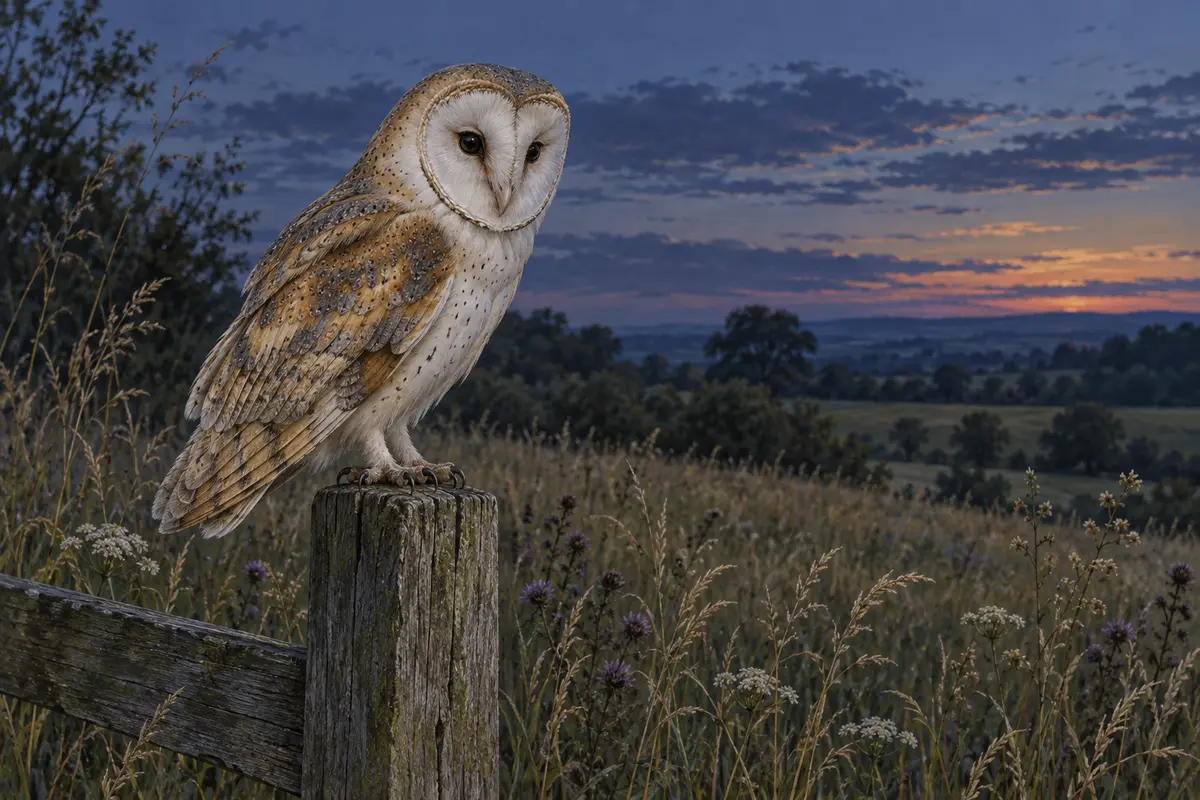
The owl’s presence after dark gives artists plenty to work with: a face emerging from shadow, a call without a visible caller, or a still shape on a fence. Those details can suggest attention to things that are easy to miss. Calling this “insight” is a metaphor, not evidence of supernatural perception.
Real behavior is interesting enough on its own. The Cornell Lab’s American Barn Owl guide describes a nocturnal hunter with strong low-light vision and hearing. It searches open areas for prey and makes a raspy screech rather than the familiar hoot people may expect.
Still, not every owl fits the night-only image. Cornell’s Burrowing Owl guide describes a long-legged owl that is active during daylight and uses burrows. Species differences are a good reason not to attach one meaning to every sighting.
For another animal whose nighttime appearance invites interpretation, explore moth symbolism in light, darkness, and transformation. The comparison is useful precisely because the animals and the stories around them are different.
Owl symbolism in literature and ominous stories
An owl can represent unease as well as wisdom. In Act 2, Scene 2 of Macbeth, Lady Macbeth hears an owl during the murder of Duncan and calls it the “fatal bellman.” The Folger Shakespeare Library’s text places that sound inside a scene of fear and violence.
Within the play, the call helps create an atmosphere of dread. It does not establish that hearing an owl outside your window announces a death. Reading a symbol well means keeping the story’s dramatic purpose separate from claims about everyday life.
The same caution helps when comparing raven imagery in myth and culture or crow symbolism across different settings. A dark or nighttime bird need not be reduced to a bad omen. Look for the particular work, community, or tradition behind the claim.
What seeing or hearing an owl can mean to you
A striking encounter can become meaningful without being a message sent to you. Perhaps you saw an owl after a difficult decision and associate it with patience. Someone else may remember the same kind of bird as part of a childhood landscape. Both are personal associations, not competing predictions.
Begin with what you actually noticed: the place, the time, the bird’s appearance, and what it was doing. Then separate that observation from your response. “I heard an owl and felt reflective” says something honest about the experience. “An owl told me what will happen” adds a claim the encounter cannot establish.
If you enjoy reflection, ask what quality you would like to carry from the moment: curiosity, attentiveness, or a willingness to pause. You do not have to interpret every repeat sighting as an increasingly urgent sign. Nor does choosing no symbolic meaning make the encounter less worthwhile.
Spiritual interpretations and dreams
Some people use owl imagery in personal spiritual practice to represent inner listening or an ability to face the unknown. These are beliefs and metaphors, not verified abilities granted by an animal encounter. You can respect someone’s interpretation without presenting it as a promise of protection or a warning of harm.
Likewise, an owl in a dream has no single decoding key offered by this guide. Consider the details you remember and the associations you already have with the bird. An owl from a favorite book may carry a different personal meaning from one that frightened you in a film. Reflection can remain open-ended; it need not produce a diagnosis or forecast.
Owl symbolism in tattoos and personal design
For a tattoo or illustration, decide which idea matters before choosing decorative elements. An owl with a book can express a personal commitment to learning. A night landscape may emphasize mystery, while an attentive perched bird can suggest patience. These are possible design readings, not fixed meanings every viewer will share.
If your design borrows from a historical object, identify that object and understand its setting. An Athenian coin reference is more specific than an unexplained mixture of sacred motifs. A naturalistic owl can also stand on its own: you do not need to borrow a community’s religious imagery to express something personal.
The strongest use of owl symbolism leaves room for that distinction. History explains where an association comes from; your chosen design explains what you want it to mean now.
Frequently asked questions
What does an owl symbolize?
An owl can symbolize wisdom, watchfulness, mystery, or unease, depending on its setting. Athena’s owl and the owl in Macbeth illustrate very different uses. Check the source of an interpretation before treating it as universal.
Is seeing an owl good luck or bad luck?
Seeing an owl does not establish that good or bad luck is coming. Interpretations belong to particular beliefs, stories, or personal experiences. You can appreciate the bird and any meaning it holds for you without turning the encounter into a prediction.
Does a white owl have a special meaning?
A pale owl may suggest calm or mystery to an artist or viewer, but color alone does not establish a spiritual message. Identify the bird and consider the setting first. A personal color association is different from a documented cultural tradition.
What does an owl tattoo mean?
An owl tattoo may express learning, attentiveness, independence, or an interest in the night. Its meaning depends on the wearer, composition, and references. Ask about the design rather than assuming that every owl tattoo represents the same belief.
Sources
- British Museum: Athenian silver coin with Athena and an owl.
- British Museum: historical background to its coin-inspired owl design.
- Cornell Lab of Ornithology: American Barn Owl overview.
- Cornell Lab of Ornithology: Burrowing Owl overview.
- Folger Shakespeare Library: Macbeth, Act 2, Scene 2.
For a lighter nature motif, explore white feather meaning in remembrance and modern design, where personal reflection is kept separate from claims that an animal encounter predicts events.
Dark bird imagery appears differently in black feather meaning in literature and modern design, where real feathers, literary associations, and personal interpretation are kept in their proper contexts.