Blue Rose Meaning: Symbolism, Rarity, and Modern Use
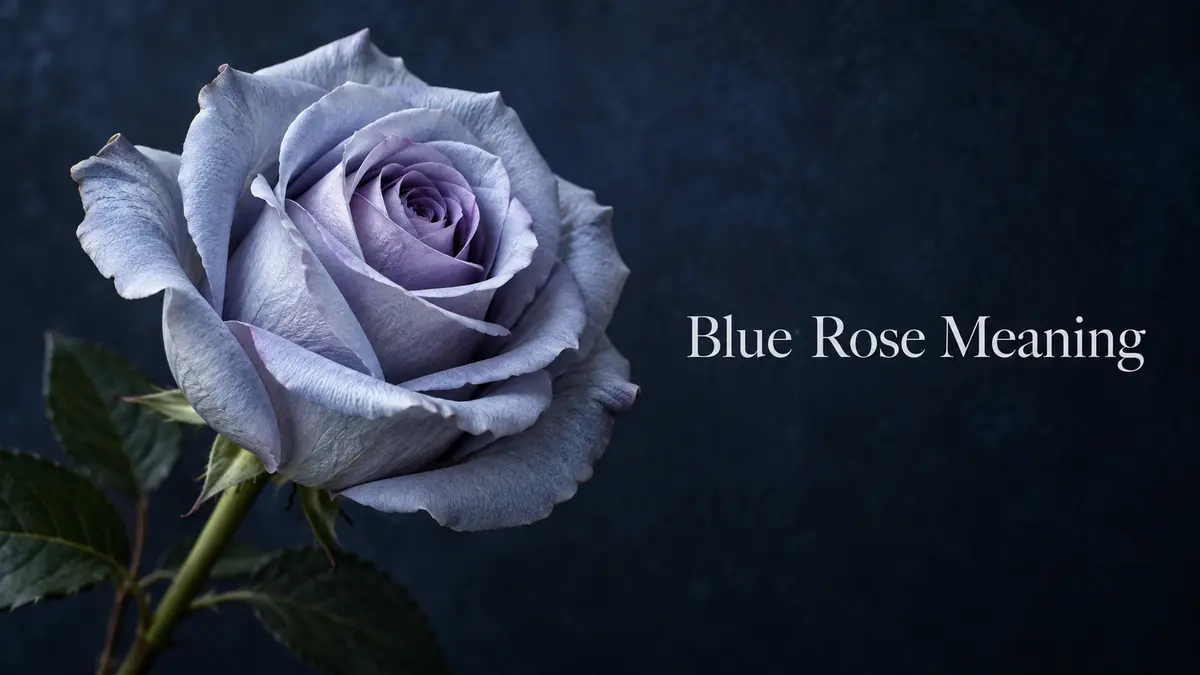
Blue rose meaning usually centers on mystery, rarity, imagination, and the pursuit of something that once seemed impossible. Because roses do not naturally produce the clear blue found in flowers such as delphiniums, the image of a blue rose has long felt unusual. Today, the flower can also suggest originality, admiration, or a love that feels singular.
Those ideas are modern conventions rather than a universal language. A dyed florist rose, a lavender-blue cultivated rose, and a blue rose in art do not carry identical histories. This guide separates flower-color science from personal symbolism, then explains how people use the motif in gifts, relationships, tattoos, remembrance, and dreams.
Blue rose meaning at a glance
| Setting | Common interpretation | What to consider |
|---|---|---|
| Romantic gift | Rare love, fascination, or an extraordinary bond | The recipient may read blue as distant or mysterious, so add a note |
| Friendship or achievement | Originality, imagination, ambition, or reaching beyond limits | Connect the flower to a specific quality or milestone |
| Tattoo or artwork | Individuality, an impossible dream, or beauty outside convention | Color, surrounding imagery, and the wearer’s story shape the design |
| Memorial use | A unique person, enduring wonder, or quiet remembrance | There is no standard funeral meaning across cultures |
Why blue rose meaning became tied to the impossible
Roses offer many reds, pinks, whites, yellows, and warm purples, but conventional breeding did not produce a saturated true-blue rose. That absence made the imagined flower useful in stories and art: it could represent a quest, a rare person, or a goal beyond ordinary reach. The symbolism grew from contrast between a familiar flower and an unfamiliar color.
“Impossible” does not always mean hopeless. In a gift, it can praise someone who achieved what others thought could not be done. In a creative setting, it can stand for invention and curiosity. In romance, however, the same idea may imply an unattainable person or love kept at a distance. Context and the giver’s words matter more than a fixed color chart.
Are blue roses real?
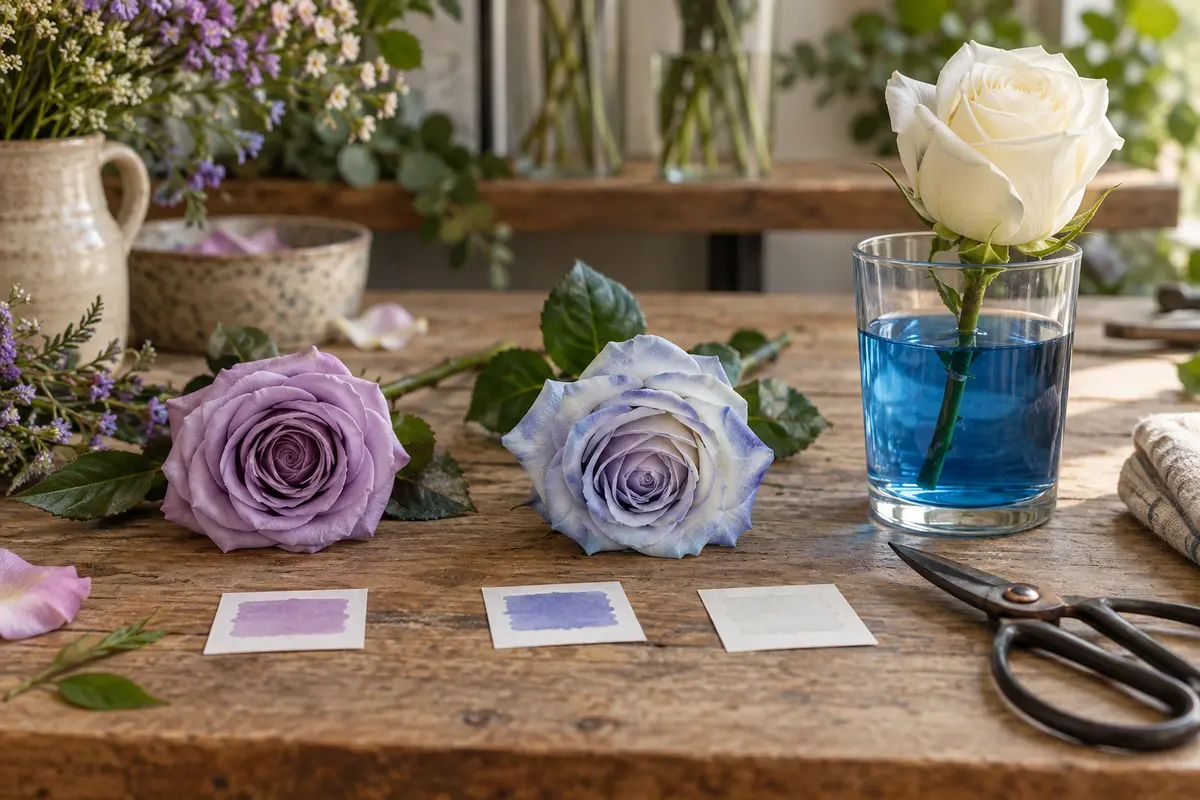
The short answer depends on what “blue” means. Florists sell white roses dyed vivid blue, breeders offer cultivars described as lilac, mauve, or lavender, and biotechnology has produced roses with a cooler blue-violet hue. None should be confused with a naturally sky-blue rose.
Flower color is influenced by pigments, acidity, co-pigments, cell structure, and light. PubChem identifies delphinidin as an anthocyanidin found in many blue or violet flowers and fruits. Ordinary roses do not make substantial delphinidin through their native pigment pathway.
Researchers altered that pathway so selected roses could accumulate delphinidin. A peer-reviewed study in Plant and Cell Physiology reported blue-hued flowers in engineered lines, with delphinidin forming a large share of their anthocyanidins. The authors also explained that pigment alone does not guarantee a pure blue because the cellular environment affects the final color.
Suntory’s official account of its blue-rose research and award links the commercial project to that published work. Photographs of the resulting flowers are generally closer to lavender or cool violet than bright cobalt. Describing them as blue-hued is more accurate than claiming science created a naturally occurring sky-blue rose.
Natural-looking, engineered, and dyed roses
A florist can create a strong blue color by placing a pale rose in dyed water or applying color to the petals. Veins, edges, or leaves may show traces of dye, and color can transfer to hands or fabric. Ask the seller whether a rose is dyed, tinted, or sold under a cultivar name if that detail affects the message.
Lavender and mauve roses are grown in those shades rather than colored after cutting, but lighting and product photography can make them appear bluer online. Engineered blue-hued roses are a separate category created by changing pigment production. These differences do not make one kind more meaningful than another; they simply change the factual story behind the flower.
Blue rose meaning in love and relationships
In romance, a blue rose often says, “You are unlike anyone else.” It can express fascination, admiration, or appreciation for a bond that does not fit a familiar script. A single stem may feel restrained and mysterious, while a bouquet can turn the same message into a dramatic celebration of rarity.
The motif also has a more complicated side. Because the flower was historically unavailable, it may represent unreturned affection, distance, or someone who seems impossible to reach. That reading is not automatically negative, but it can be ambiguous. A short card—“For the person whose imagination changed my world,” for example—makes the intention clearer than color alone.
Blue is not a universal romantic code. Personal associations, cultural background, and the occasion can outweigh popular lists. If the recipient loves unusual flowers, the choice may simply recognize their taste rather than announce a hidden message.
Friendship, achievement, and new possibilities
Outside romance, the flower works well as a symbol of originality. It can honor a friend who follows an independent path, a graduate entering an unconventional field, or a colleague who solved a difficult problem. The once-impossible color makes it especially suited to milestones built on persistence and experimentation.
This interpretation should celebrate effort without promising future success. A blue rose cannot predict that a plan will work; it can serve as a tangible reminder to stay curious. For another flower whose meanings change across art and religious history, see our guide to lotus flower meaning and cultural context.
Mystery, individuality, and creative identity
Artists often use an unexpected color to make a familiar object feel strange again. A blue rose can therefore suggest secrecy, imagination, surreal beauty, or life outside convention. In fashion and interior design, it may communicate elegance and cool restraint rather than a complete symbolic story.
Individuality is one of the motif’s most flexible readings. Someone may choose it because they resist standard labels, value invention, or find beauty in what looks improbable. That personal use is valid, but it should be described as the person’s interpretation—not as an ancient rule shared by every culture.
Blue rose meaning in tattoos
A tattoo may represent an impossible dream, self-invention, rare love, or a private mystery. The design changes the emphasis: a realistic lavender rose can feel reflective, a saturated blue traditional rose may look bold, and a rose combined with stars or geometric shapes can lean toward imagination and exploration.
Names, dates, thorns, broken stems, and other additions can alter the message. Before committing, write one sentence explaining what the image means to you and show it to the artist. That gives the artist a clearer brief than copying a generic chart. Also check how blue pigments may age on your skin tone with a qualified tattoo professional.
Gifts, weddings, and remembrance
For birthdays or congratulations, blue roses can celebrate a distinctive personality or ambitious goal. At a wedding, they may express a couple’s unconventional story or simply support a cool-toned palette. They are not a traditional requirement, and no color can guarantee loyalty, harmony, or lasting love.
In remembrance, the flower may honor someone remembered as singular, imaginative, or difficult to describe. It can also create a calm visual atmosphere. Families should choose flowers that fit the person and their own customs, because blue roses have no universal funeral meaning. Our article on white feather meaning in remembrance offers a similar distinction between personal comfort and claims about messages from beyond.
Dreams and repeatedly seeing blue roses
A dream involving a blue rose does not have a scientifically established prediction. It may reflect a recent image, a wish that feels difficult, attraction to something unusual, or a question you have not resolved. Your emotional response in the dream is more informative than a fixed dictionary entry.
Likewise, noticing the image repeatedly can follow ordinary attention. After learning a symbol, people often recognize it more readily in shops, feeds, art, and conversations. Use the pattern as a prompt: What currently feels rare, mysterious, or just beyond reach? Reflection can be useful without treating repetition as an external command.
How to choose and give a blue rose
First decide whether the recipient would prefer a real flower, a dyed novelty, a cultivated lavender rose, or lasting artwork. Ask a florist how the color was produced and whether the dye needs special handling. If the gift is for clothing, a table setting, or an event, check for possible color transfer.
Next, state the message. A note can connect the flower with imagination, courage, an extraordinary friendship, or a shared private joke. This prevents the “unattainable love” interpretation from overshadowing a positive intention.
Finally, avoid promising luck or supernatural results. Symbols can carry memory and emotion without controlling events. The same evidence-first approach helps when reading protective motifs such as hamsa hand meaning in cultural context.
Frequently asked questions
What is the blue rose meaning?
Blue rose meaning commonly includes mystery, rarity, imagination, individuality, and the pursuit of something once considered impossible. In romance it can suggest a singular love or an unattainable person. The occasion and the giver’s explanation determine which reading fits.
Do blue roses exist naturally?
Roses do not naturally produce a clear sky-blue bloom. Florists can dye pale roses vivid blue, some cultivated roses are lavender or mauve, and engineered roses can accumulate delphinidin and appear blue-violet. These are different processes.
What does a blue rose mean as a gift?
It may praise someone’s originality, celebrate a difficult achievement, or express fascination and rare affection. Because it can also imply distance or unattainable love, include a note when the message matters.
Is a blue rose a good tattoo?
It can be a meaningful tattoo for individuality, imagination, rare love, or an ambitious personal goal. Choose the shade and surrounding details deliberately, and explain your intended story to the artist instead of relying on a universal symbol chart.
Sources
- Plant and Cell Physiology: Engineering of the Rose Flavonoid Biosynthetic Pathway Successfully Generated Blue-Hued Flowers Accumulating Delphinidin.
- Suntory: Yoshikazu Tanaka receives an award for blue-rose research.
- National Library of Medicine PubChem: Delphinidin.
For the darker counterpart to blue-rose symbolism, explore black rose meaning and modern symbolism, where color can mark endings, reinvention, or unconventional beauty.
For a classic pale flower with different associations, see white rose meaning in weddings and sympathy, which explains its use in weddings, sympathy, and personal gifts without treating symbolism as prediction.