Fox Spirit Animal Meaning: When Cleverness Has a Cost
Fox spirit animal meaning can be a useful metaphor for adaptable thinking, not a prediction.
The familiar fox symbol has two sides: flexible thinking can solve a difficult problem, but it can also become an excuse to avoid a direct conversation. That distinction is more useful than a fixed list of signs or predictions.
Seeing a fox in the wild, noticing an image, and dreaming about a fox are different experiences. The real animal acts for ecological reasons. Any personal meaning is an interpretation you choose, not evidence that it has predicted an outcome.
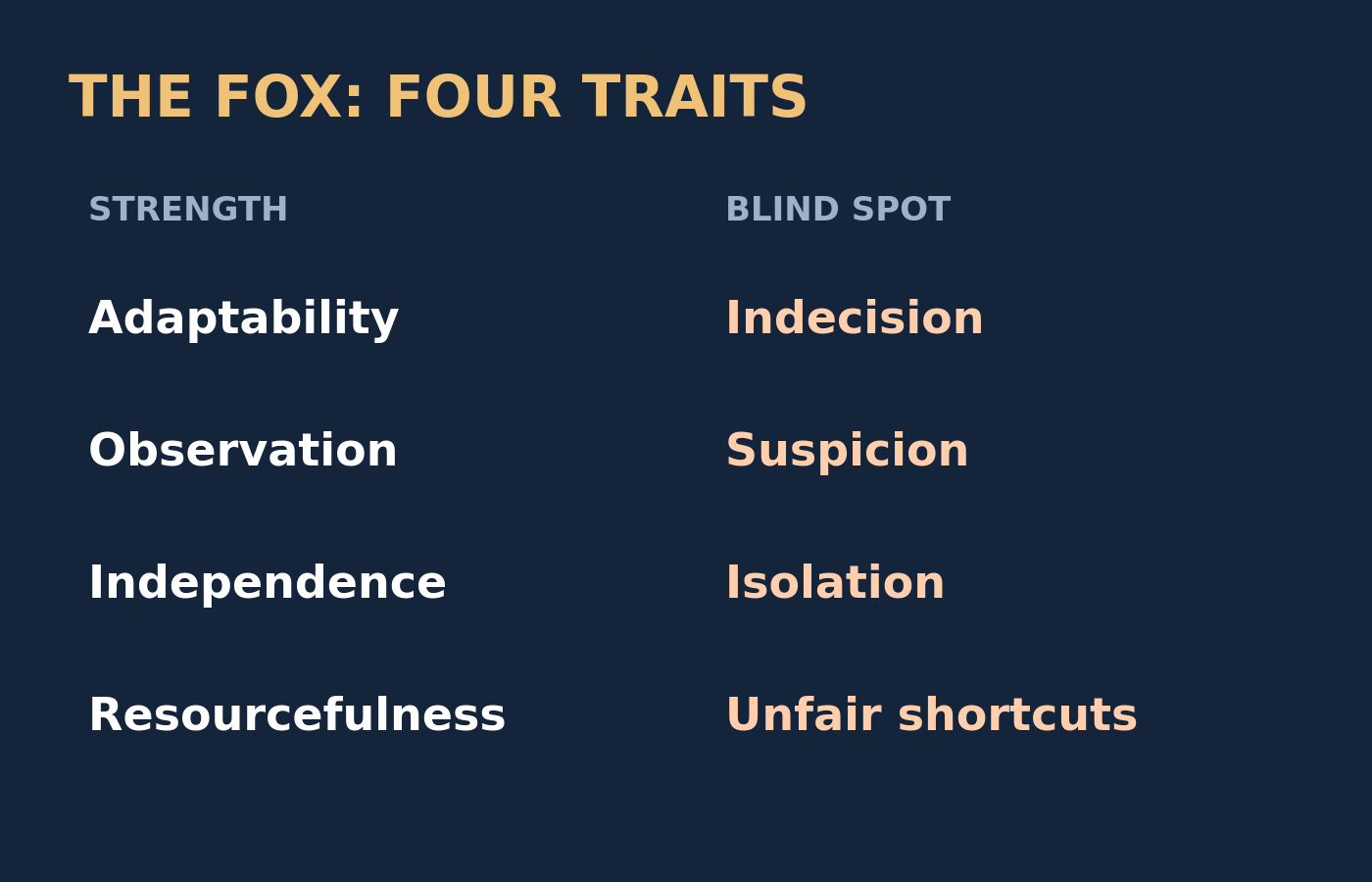
In brief: The fox spirit animal commonly represents adaptability, keen observation, independence, and resourcefulness. The cautionary side is using cleverness to hide feelings, manipulate a situation, or postpone a decision. These are symbolic associations, not scientific properties of the animal.
The real fox behind the familiar symbolism
The red fox (Vulpes vulpes) is a flexible forager found in woodlands, fields, and suburban settings. The National Wildlife Federation describes a varied diet including rodents, rabbits, birds, and fruit. That adaptability helps explain its reputation for resourcefulness.
The U.S. National Park Service describes keen senses that help foxes find food and avoid danger. It also notes that red foxes cache surplus food. Their alertness reflects survival strategies, not human moral intentions.
Four familiar qualities of the fox symbol
Adaptability without losing direction
When a familiar plan stops working, changing the route can be wiser than repeating the same effort. The constructive fox metaphor encourages another approach while keeping your priorities intact. The drawback appears when being flexible becomes a way to avoid finishing anything.
Attention without suspicion
Noticing details can help during a complex project or a difficult conversation. But reading the room is not the same as assuming everyone has hidden motives. Useful awareness checks impressions against evidence before reacting.
Independence without disappearing
Time alone can support clear thinking and personal boundaries. Trouble begins when privacy turns into unexplained silence toward people who rely on you. Independence works best alongside accountability.
Resourcefulness without damaging trust
Finding a practical alternative is valuable when resources are limited. Yet shortcuts can backfire if they shift costs to others or conceal important information. Ask whether your solution would still feel fair if everyone understood it.
For contrast, owl symbolism traditionally emphasizes observation and wisdom, while the fox metaphor often emphasizes adaptability and strategic choices. Neither association turns an animal encounter into a factual prediction.
The cleverness dilemma: strategy versus trust
Foxes are often portrayed as tricksters in stories. That reputation can make the symbol especially appealing when life feels uncertain. But cleverness is not automatically wisdom. Sometimes the conversation you have been preparing to avoid is exactly the one that needs to happen.
In a relationship, careful observation can help you understand a partner; turning every delayed reply into a test of loyalty does the opposite. At work, gathering information before proposing a solution helps everyone; withholding crucial context to gain an advantage damages the team. With friends, privacy is healthy, but secrecy that affects shared commitments is not.
The most useful fox question may be: Does this tactic make my situation clearer, or does it only keep me hidden from it? A symbol becomes practical when it leads to a decision you can evaluate, rather than a label you can repeat.
Seeing a fox: the setting changes the interpretation
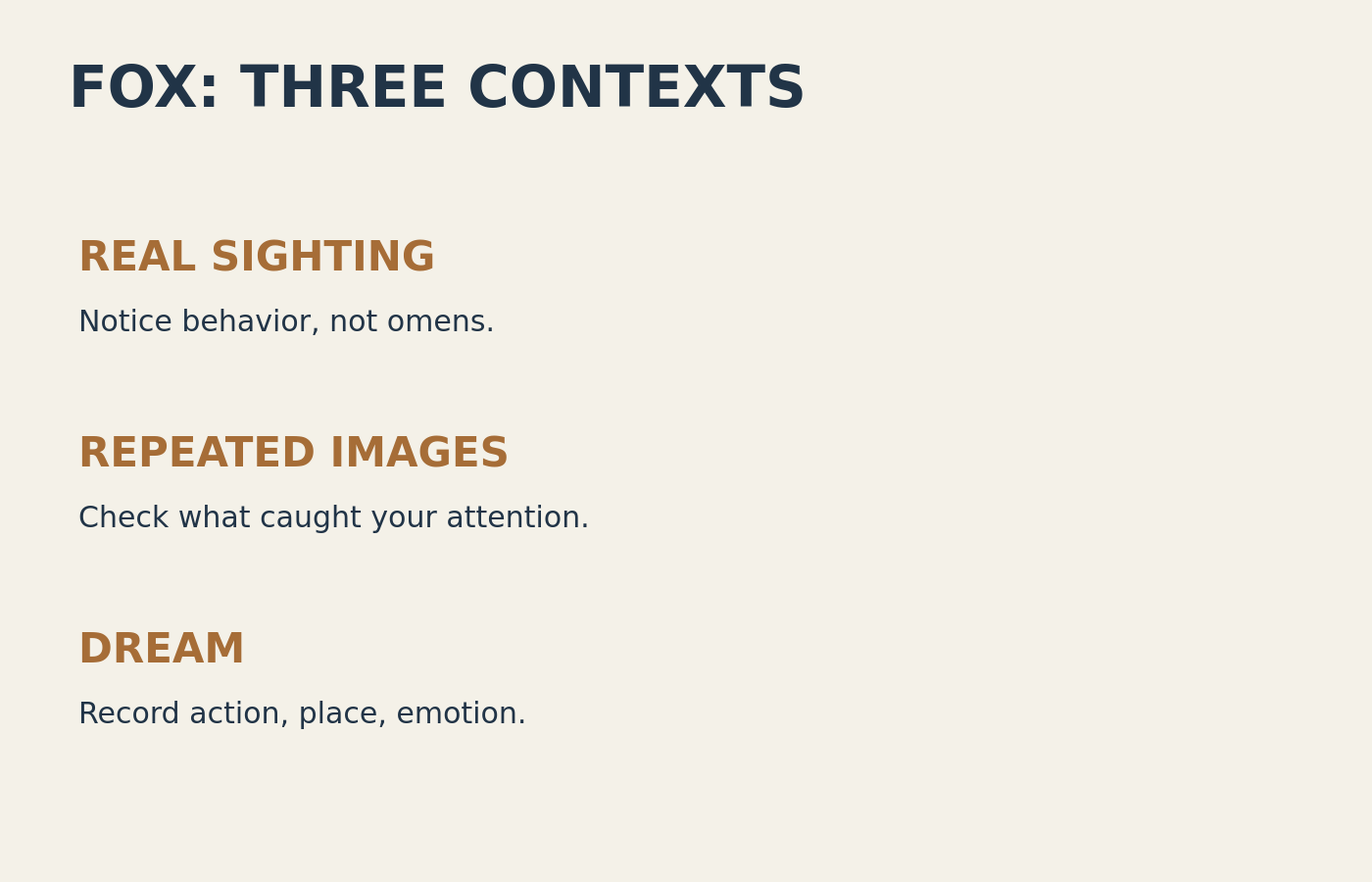
A real fox crosses your path
In the wild, a fox crossing a path is simply moving through its habitat. It is not evidence of an approaching opportunity, betrayal, or lucky event. If the encounter feels meaningful to you, reflect on the moment rather than assuming the animal intended to send a message.
Perhaps the fox paused while you were rushing, or its quiet movement caught your attention. You might choose to use that moment as a reminder to observe before reacting. That is a personal decision, not a prediction. Keep your distance, never feed wildlife, and consult local wildlife authorities if a fox appears injured or unusually distressed.
Foxes appear repeatedly in your feeds or conversations
Interest changes attention. After reading about foxes, you may start noticing them in advertisements, names, photos, and discussions. That repetition need not imply anything outside ordinary awareness. Ask which topic was already on your mind when the references began to stand out.
A fox appears in a dream
Dreams can combine memories, emotions, and recent experiences in unusual ways. A fox watching from a distance may feel very different from one running, hiding, or entering your home. There is no validated dream dictionary that assigns one outcome to every fox scene.
Write down what the fox did, where it appeared, and how you felt. A threatening scene might tell you more about fear than cunning; a quiet scene might simply reflect curiosity. For another example of context-first animal dream interpretation, read our spider dream meaning guide.
Using fox symbolism in everyday choices
Work and decisions: experiment, then follow through
Suppose a proposal has failed twice. A fox-inspired response is not a more elaborate excuse. It is to investigate what assumption failed, seek feedback, and revise the plan. Flexible thinking is strongest when paired with measurable results and the willingness to explain your reasoning.
Relationships: observe without playing games
It can be useful to notice changes in someone’s tone or availability. But private theories do not replace communication. Ask a respectful question instead of testing another person’s loyalty. If you need space, explain that need rather than disappearing.
Boundaries: choose discretion, not evasion
Not every disagreement demands an immediate response. You may need time to reflect or decide what personal information to share. The practical difference between healthy privacy and avoidance is whether you remain accountable for promises and communicate what others genuinely need to know.
Fox color is not a fixed code
Some guides assign separate personal meanings to red, white, gray, or black foxes. Those associations are subjective, not evidence of future events. Wild fox coloration varies across species and individuals, while lighting changes how an image appears.
If a color stands out in a dream, ask what it suggested in that scene. If you are looking at a real animal, learning about its species and habitat is more informative than a universal symbolic color rule.
Fox, coyote, and lone wolf are not interchangeable
Foxes, coyotes, and wolves belong to the dog family, but the metaphors people build around them differ. A fox often draws attention to observation and flexible tactics. A coyote is frequently associated with improvisation. A lone wolf image tends to emphasize distance and self-reliance.
Our guides to coyote spirit animal meaning and lone wolf symbolism offer distinct questions to consider. These are cultural comparisons, not biological definitions of animal personalities.
A five-minute reflection you can actually use
- Identify the encounter. Was the fox a real animal, an image, a story, or a dream?
- Choose one association. Did adaptability, alertness, independence, or resourcefulness resonate most?
- Find the trade-off. Could your chosen strength become indecision, suspicion, avoidance, or an unfair shortcut?
- Write one testable action. Choose a conversation, decision, or small change you can make this week.
- Review the result. Keep the reflection if it helps; discard it if it increases fear or unsupported assumptions.
For example, someone overwhelmed by competing priorities may appreciate the fox’s resourcefulness. A concrete response would be to finish one important task with tools already available, rather than wait for another fox sighting to confirm what to do.
Questions readers ask about the fox spirit animal
What does a fox spirit animal mean in everyday terms?
It is commonly used as a metaphor for adaptability, attention, resourcefulness, and independence. Its less flattering side is cleverness that turns into avoidance or manipulation. The symbolism is personal, not a scientifically established animal message.
Is seeing a fox a sign of good luck?
There is no evidence that a fox sighting predicts luck, a relationship outcome, or a coming event. You can value the encounter without treating it as a forecast.
Does a fox always symbolize deception?
No. Foxes often play trickster roles in stories, but modern symbolism also emphasizes flexibility, observation, and quick learning. A symbol has no single fixed moral value.
What does it mean when a fox looks at you?
A wild fox may simply be assessing its surroundings before moving away. The gaze does not prove a personal message. If it affected you, ask why the moment felt memorable rather than assigning an intention to the animal.
Why do I keep dreaming of foxes?
Dreams may repeat memorable images, concerns, or experiences. Track the setting, action, and emotion over several mornings. Recurrence alone does not establish a fixed meaning.
Can fox symbolism help with a relationship or career decision?
As a reflective tool, yes: it may encourage better timing, flexibility, or a direct conversation. It cannot reveal another person’s private intentions or predict the result of a choice.
Sources and image credit
Wildlife facts are based on the National Wildlife Federation’s red fox profile and the National Park Service’s red fox guide. Symbolic associations are presented as personal metaphors, not claims about animal intentions or future events.
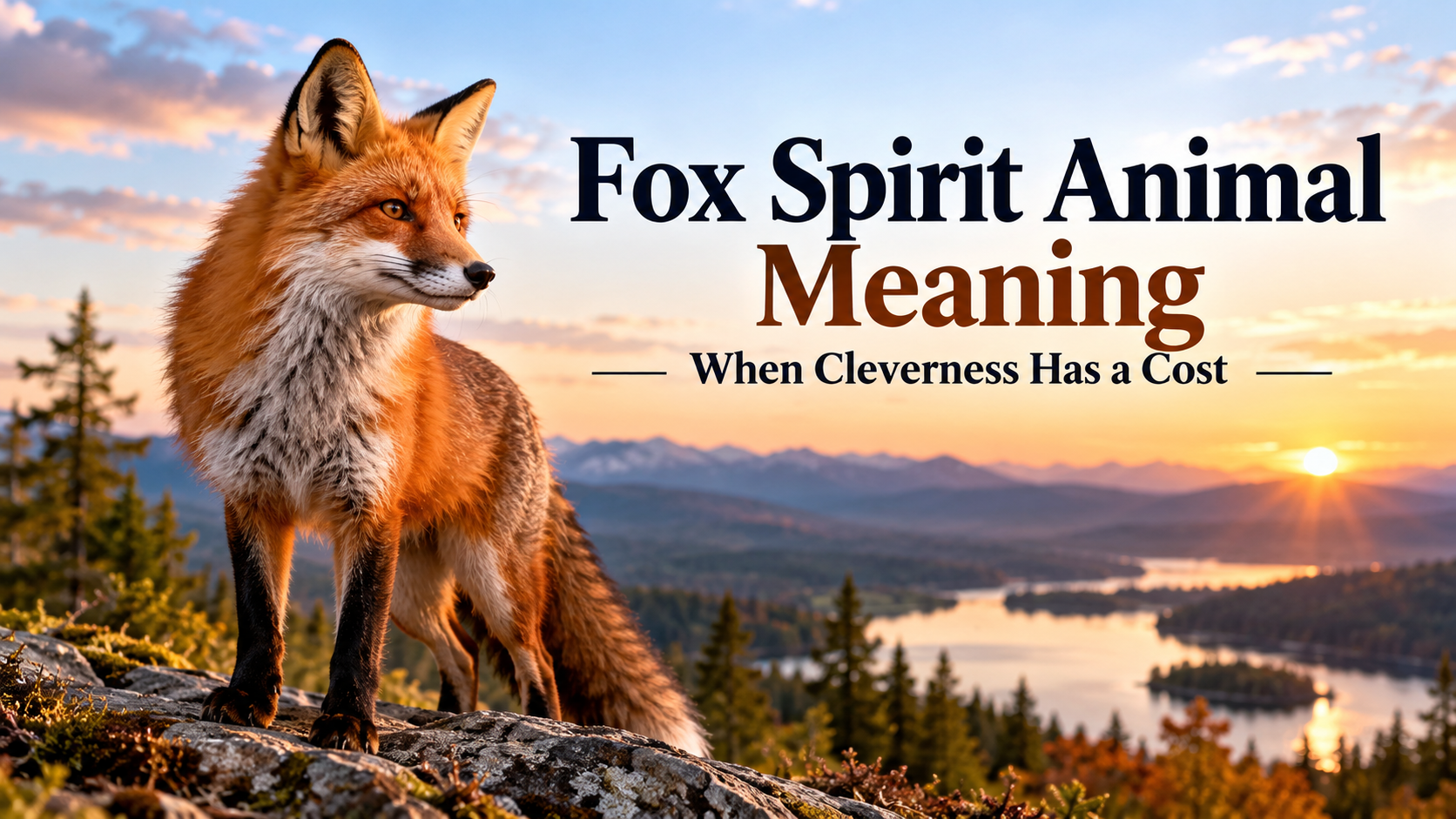
Featured photograph: Rettinghaus jr., Rotfuchs vor einem Baum, CC BY 4.0. Cropped and adapted with editorial typography. The two explanatory diagrams were created for this article.
Ultimately, the fox spirit animal is a useful reminder to adapt while remaining clear and considerate. If the metaphor leads to a sounder decision, it has served its purpose. If it creates fear or unsupported assumptions, leave that interpretation behind.
For a related guide, read Birth Flower by Month: Find Your Flower and Its Meaning.