Red String of Fate Meaning: Chinese & Japanese Legend
Red string of fate meaning starts with an arresting idea: an invisible red thread may connect two people long before they meet. You might have seen it wrapped around little fingers in an illustration, stitched into a wedding gift, or mentioned in an anime. The image feels romantic because it gives distance and coincidence a shape. Yet its history is more specific than the viral version. We should not treat the older Chinese tale, its Japanese adaptation, and today’s personal interpretations as one identical story.
Quick answer: Red string of fate meaning refers to an East Asian legend about a hidden bond between people believed to be destined to marry or meet. The older Chinese story involves Yue Lao and a red cord tied to the feet of future spouses. Modern Japanese imagery often places the thread around the little fingers. It is folklore, not a reliable way to predict a partner.
Red String of Fate Meaning: What the Thread Represents
The red string of fate meaning is best understood as a metaphor for an important relationship that seems to survive distance, delay, or unexpected turns. A string is thin enough to disappear from view yet strong enough to suggest connection. The color red adds an emotional cue: love, attachment, and a bond that matters. None of those associations proves that a literal invisible thread exists. A symbol works because people give it meaning, not because it measures the future.
People sometimes use the thread metaphor for friends reunited years later, not only lovers. That is a modern extension of an older marriage story. Like the white rose meaning, the message changes with its occasion and the person using it.
Look for three layers when interpreting an illustration or caption:
- The older story: a supernatural matchmaker links future spouses.
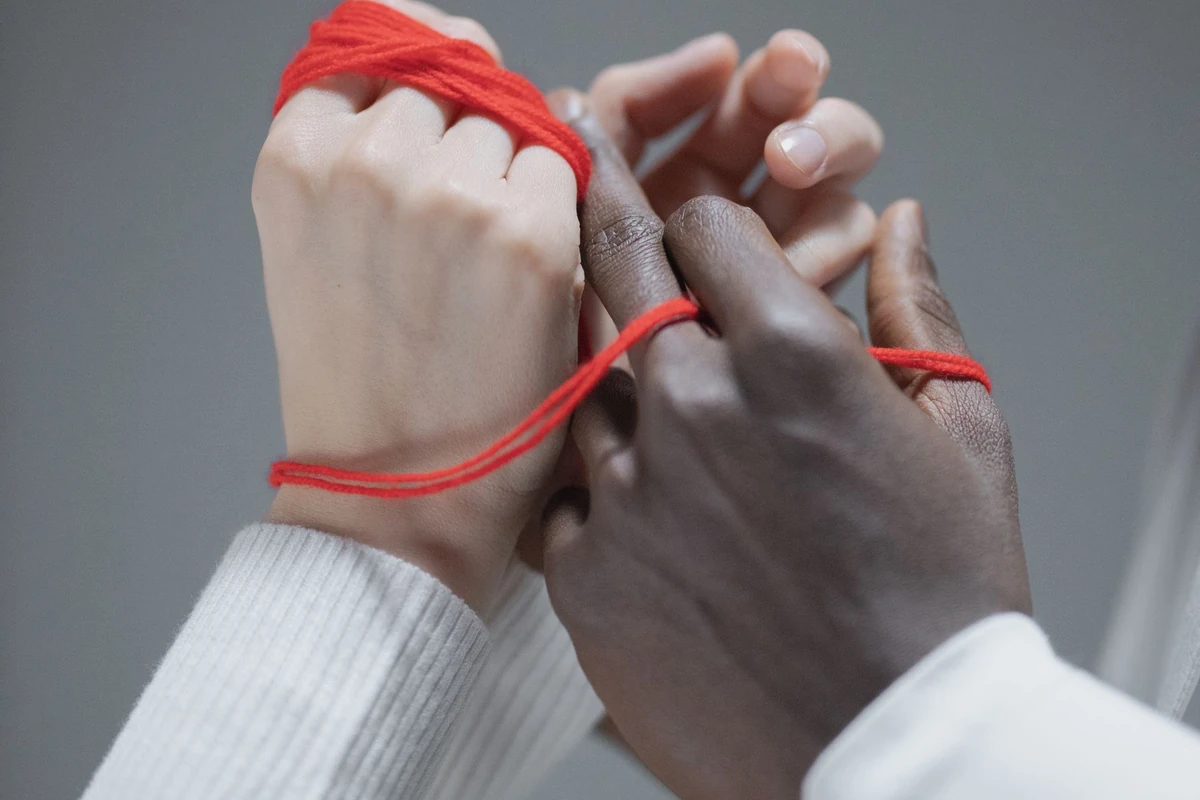
- The familiar image: red thread joins two people, often at their little fingers.
- The personal metaphor: someone uses the image to express hope, affection, or a meaningful encounter.
The Chinese Legend: Yue Lao and the Red Cord
One important source of the red string of fate meaning is the Chinese story of Yue Lao, often translated as the Old Man Under the Moon. Tradition portrays him as a marriage matchmaker. In the tale, a young man named Wei Gu encounters an elderly figure reading a register of marriages by moonlight. The old man describes red cords that secretly bind the feet of people fated to become husband and wife. The story presents the connection as difficult to escape, even when social differences stand in the way.
The Singapore-based San Qing Gong Taoist Cultural Centre’s account of Yue Lao retells this tradition and identifies the cord as tied to the feet. A detailed philological review of the Chinese and Japanese texts traces the early tale through Tang-period writing and later collections. These are sources for a cultural narrative, not evidence that supernatural strings control arranged meetings.
The tale reflects the marriage ideas of its setting, not rules for choosing a modern partner. Compare evil eye symbolism, where protective associations differ from Yue Lao’s matchmaking legend.
Japan’s Akai Ito: From the Cord to Little Fingers
In Japan, the expression unmei no akai ito means the red thread of fate, while akai ito simply means red thread. The popular image is an invisible string linked to the little fingers of people who are meant to find each other. That picture is particularly easy to share in drawings, romantic dramas, and everyday conversation. The Japan Times ST essay on “akai ito” describes how people explain the metaphor to visitors and why it feels romantic.
The red string of fate meaning did not suddenly appear in Japan as a completely separate invention. Japanese expressions drew on older Chinese narratives, while later retellings transformed their details. The textual history is more complicated than a neat timeline on social media. Research comparing the sources shows that older versions describe feet or a cord without naming fingers, whereas pinky-finger imagery becomes conspicuous in modern Japanese usage. It is more accurate to say the finger motif became familiar later than to assign it one certain inventor.
Here is a quick comparison that keeps the variations separate:
| Version | Typical image | Main idea |
|---|---|---|
| Older Chinese legend | Red cord joining feet | Yue Lao and a destined marriage |
| Popular Japanese expression | Invisible thread at little fingers | Two people connected across time |
| Modern art and tattoos | Looped or tangled red line | Personal memories, love, or hope |
What Red, Knots, Distance, and Tangling Can Mean
The red string of fate meaning gains much of its appeal from a small set of visual details. The thread looks fragile, but the story asks viewers to imagine a connection that persists. Distance lets an artist show longing. A knot can suggest a difficult period; a loose loop can suggest uncertainty. These are interpretations of a metaphor rather than rules encoded in ancient texts. A picture of a broken thread does not prove someone has lost a soulmate.
The following details are useful when reading artwork, tattoos, or social media posts:
- Two people at opposite ends: separation, a hoped-for reunion, or a bond that feels meaningful.
- A thread around little fingers: the familiar Japanese-style representation of fated lovers.
- A knot or tangle: a modern image of complications; not a fixed prediction about the relationship.
- One hand holding the thread: waiting, remembrance, or an unfinished personal story.
- A spool or loose strand: a visual shorthand for the legend rather than a ritual with guaranteed results.
Red is significant in numerous traditions, but its meaning is not identical in all of them. A red bracelet worn for protection in another cultural or religious context does not automatically count as a “fate thread.” Nor is a thread the same symbol as a flower. For a contrasting example of romantic symbolism, our blue rose meaning article explores how rarity and imagination change the message of a color.
Red Thread of Fate in Romance and Popular Culture
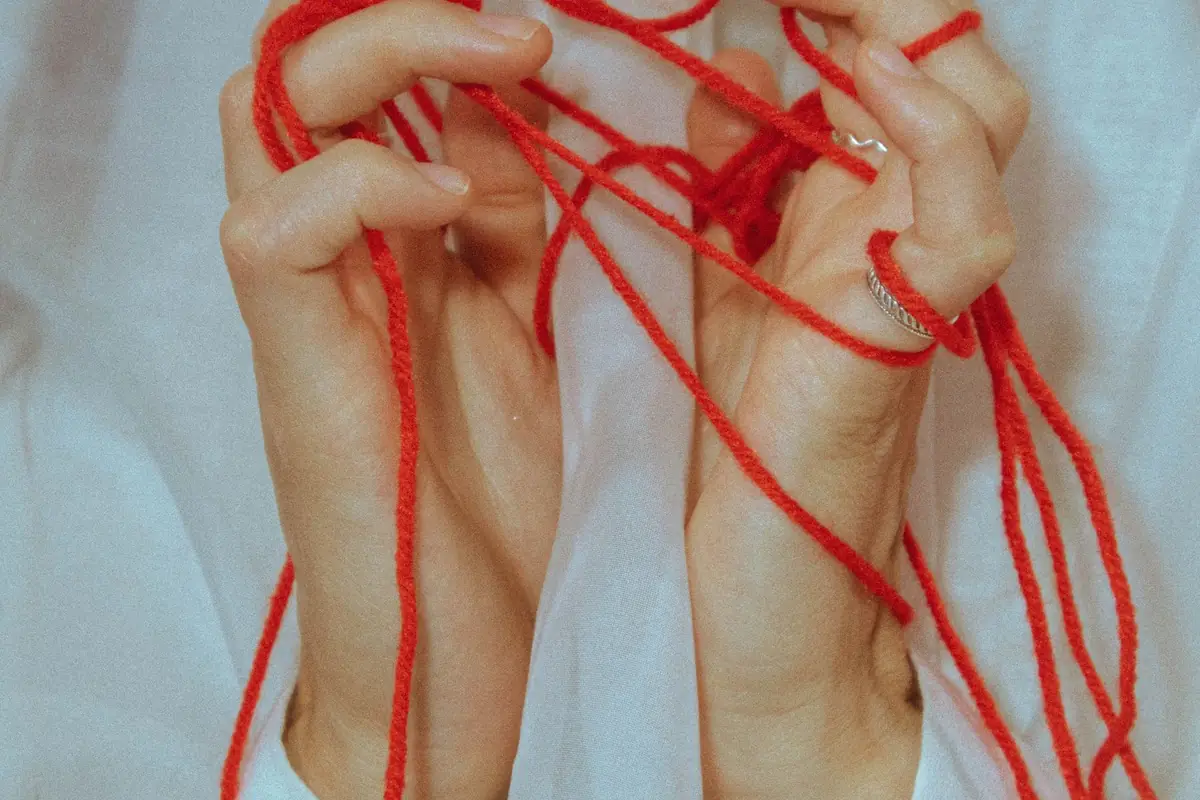
Today, the red string of fate meaning appears in romance stories, wedding gifts, illustrations, and tattoos. A thread stretched between characters may suggest a future meeting; two names joined by a loop may honor a shared history. In a breakup poem, the same line may suggest a bond remembered, not one that should continue.
People can misuse the image: attraction or coincidence does not make a difficult relationship “destined.” Feelings alone cannot establish another person’s intentions. Our limerence and intense crushes guide offers a practical distinction between affection and fixation. Folklore is not a compatibility test.
Three questions keep symbolism in perspective:
- Is the story being used as creative language or presented as factual certainty?
- Does the relationship involve consistent care, honesty, and freely chosen commitment?
- Can both people change their minds or set boundaries without being told they are resisting “fate”?
The red string of fate meaning does not override consent. Grand romantic statements may feel beautiful, but they cannot substitute for trust. Our love bombing meaning guide explains why dramatic declarations should be weighed against behavior over time. The goal is not to reject romantic symbolism. It is to enjoy it without surrendering judgment.
For more traditions interpreted through objects, animals, and colors, explore MeaningTrail’s Symbols & Meanings collection. Each symbol deserves its own cultural setting rather than a single universal explanation.
Red String of Fate Meaning: Five Common Questions
Is the red string of fate Chinese or Japanese?
Its well-known marriage story has Chinese roots, including Yue Lao and the cord attached to future spouses’ feet. Japan developed its own familiar language and imagery around the red thread, especially the little fingers. Treating the two as related traditions with different details is more accurate than claiming they are identical or that only one country has ever told the story.
Does the red string of fate mean you have a soulmate?
In the folklore, the thread symbolizes a destined relationship. People today often broaden that into a soulmate metaphor, but the red string of fate meaning does not establish that everyone has one objectively predetermined partner. It can describe hope, a sense of coincidence, or a relationship someone already values. Your choices still matter.
Can the red string break, tangle, or stretch?
Online versions often say the thread may stretch or tangle but never break. That is a popular modern way to dramatize the idea, not a scientifically testable rule. Specific storytellers may change the details. If you see a knot or break in artwork, ask what its creator intends rather than treating it as a fixed omen.
Why is the string tied to a pinky finger in pictures?
The linked-pinky version is familiar from modern Japanese imagery of akai ito. The earlier Chinese account describes a cord tied to feet. The move toward fingers fits the visual language of a romantic connection, although assigning one definitive reason or first date to every illustration would go beyond the historical evidence.
What does a red string of fate tattoo mean?
For some wearers, a red thread tattoo celebrates a partner or a meeting that changed their life. Others use it for friendship, memory, or the hope of finding connection. The red string of fate meaning in a tattoo therefore depends on the wearer, the placement, and the accompanying design. It is not automatically a religious declaration or proof of a permanent relationship.
The Red Thread Is a Story, Not a Guarantee
The enduring red string of fate meaning is a story about connection that crosses distance and surprise. It has roots in the Chinese legend of Yue Lao, while the little-finger picture familiar in Japan gives the old idea a memorable modern shape. That difference matters when describing the tradition accurately. A thread can make a moving image in art or a thoughtful gift, but no hidden cord can confirm another person’s feelings, predict a marriage, or excuse disrespect. Keep the metaphor; make the relationship real through choices and care.