Coyote Spirit Animal Meaning: The Trickster’s Unexpected Lesson
Coyote spirit animal meaning is commonly explored through a curious combination of cleverness, adaptability, playfulness and caution. Yet there is a less obvious side to the coyote image: being quick enough to solve one problem can sometimes tempt you to avoid the harder one. That tension makes the coyote more interesting than a simple symbol of good luck or intelligence.
If you keep thinking about coyotes, saw one unexpectedly, encountered the animal in a dream or simply relate to its reputation, the most useful question is not whether it “sent” a universal message. It is which part of the animal or story caught your attention and whether that association helps you examine a real choice. The interpretations below are personal and cultural metaphors, not proven predictions.
Coyote spirit animal meaning: resourcefulness versus shortcuts
A coyote survives by adjusting to the environment it actually has. The U.S. National Park Service describes coyotes as intelligent, adaptable animals that thrive both in wilderness and major urban areas. Their food sources and social arrangements vary with circumstances. These observed traits make adaptability a plausible modern metaphor, but they do not establish a fixed psychological or supernatural code.
In coyote spirit animal symbolism, that metaphor carries two sides. Resourcefulness means noticing what changed, choosing a workable response and moving forward with limited resources. Taking shortcuts means using cleverness to dodge accountability, overpromise, manipulate or avoid uncomfortable conversations. The same flexible thinking can lead to either outcome.
Imagine someone who can always improvise a solution at work but rarely documents their process. Their cleverness helps in emergencies and creates repeat problems later. A coyote-inspired reflection would not be “be more cunning”; it would be “know when improvisation is valuable and when a reliable plan matters more.”
Five coyote spirit animal traits people discuss
Adaptability without losing direction
Coyotes live in strikingly different habitats and use varied foods. For a coyote spirit animal reading, adaptability offers a clear connection between observed wildlife behavior and a personal metaphor. In a changing situation, ask whether you are updating your methods while preserving your priorities—or changing your values each time someone pushes back.
Independence that still allows connection
Images of a lone coyote can suggest self-reliance, especially if you feel comfortable working or thinking alone. However, a coyote is not simply a permanently solitary animal. Coyotes form pairs and family groups, and they communicate to maintain contact. Yellowstone National Park describes flexible family arrangements and extensive vocal signaling. The useful symbol is the ability to function alone and remain connected, not isolation for its own sake.
A voice used at the right moment
Howls, yips and barks are real coyote communication. They can help relatives maintain contact and advertise territory. As a metaphor, that invites questions about timing, clarity and boundaries: Have you said what you need to say, or have you relied on people to guess? The goal is not to make more noise but to communicate more clearly.
Humor and a willingness to revise your assumptions
The coyote’s popular “trickster” reputation often combines humor with embarrassing reversals. In everyday self-reflection, a useful reading is the ability to notice when pride makes you defend an obviously flawed plan. A well-timed joke can interrupt rigidity; humor used to humiliate someone or avoid responsibility does the opposite.
Resourcefulness with an ethical edge
Because coyotes exploit different food opportunities, they are often described as opportunistic. Human opportunism can mean taking initiative or taking advantage of others. If the coyote metaphor resonates, examine the difference. A clever choice should not require dishonesty, pressure or damage to people who trusted you.
The trickster idea is more complex than being deceptive
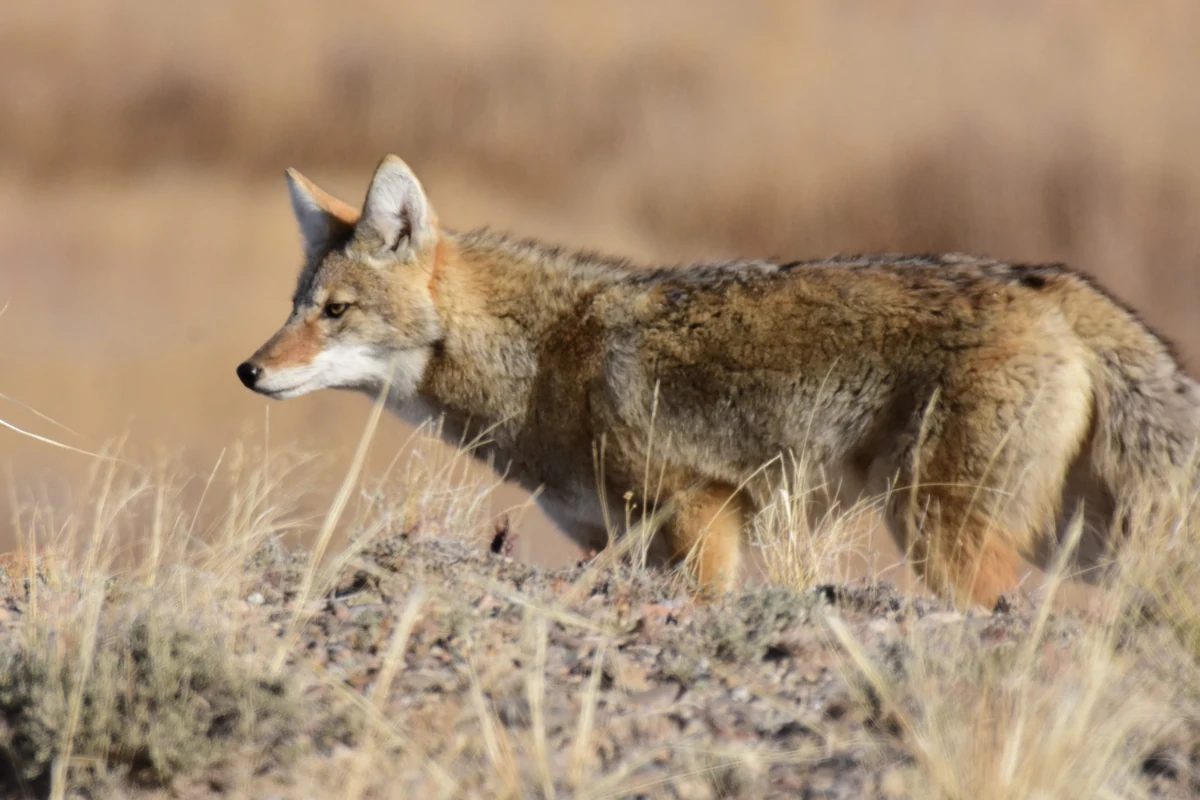
In popular modern symbolism, the coyote is often framed as a trickster: clever enough to upset an expected outcome, yet vulnerable to the consequences of its own tricks. A better reading is not “deception is good” but certainty can be misleading. The person who sees a weakness in everyone else’s plan still needs to examine their own motives and blind spots.
Importantly, “trickster” is not one uniform tradition. Coyote characters appear in distinct Indigenous storytelling contexts, and the roles and meanings vary among communities. A modern online “spirit animal” checklist should not be presented as the authoritative interpretation of those traditions. This article focuses on broad contemporary metaphor and observable coyote behavior; it does not claim to interpret any particular community’s teachings.
Coyote spirit animal meaning across sightings, calls and dreams
For a coyote spirit animal interpretation, a daylight sighting is still an actual wild-animal encounter, not evidence that a symbolic event is unfolding. Coyotes can be active at different times depending on food and human activity. If the sighting remains memorable, note your own response—curiosity, caution, admiration or surprise—rather than assuming the hour or direction supplies a fixed meaning.
Keep a safe distance and never feed wild coyotes. The National Park Service warns that food conditioning and human habituation can make encounters unsafe.
Hearing coyotes howl or yip
The chorus can sound mysterious, especially at night. But coyote howls, yips and barks serve practical social purposes, including maintaining contact and signaling territory. Multiple calls can make a small group sound much larger. If the sound makes you think about your own communication, ask where you need to be clearer, whether you have set a boundary, or whether you mistake loudness for confidence. The animal’s call is not an omen.
A coyote crossing your path
Online symbolism lists often assign a particular meaning to an animal crossing a road or trail. In reality, coyotes move to find food, travel within territories and avoid disturbances. A crossing does not predict a personal event. If it reminds you to reassess a plan, you can use that moment as a voluntary reflection without claiming the coyote intended a message.
A coyote in a dream
Dreams depend on individual memory, emotion and context. A coyote approaching, running away, chasing you or sitting quietly changes the emotional scene. Record the action and your strongest feeling before selecting any possible association. A dream about being outsmarted may bring to mind embarrassment or mistrust; a calm encounter may suggest curiosity or self-reliance. These are prompts for reflection, not diagnoses or predictions. Our spider dream meaning guide similarly prioritizes action and emotion over fixed dream dictionaries.
Coyote and wolf symbolism are not interchangeable
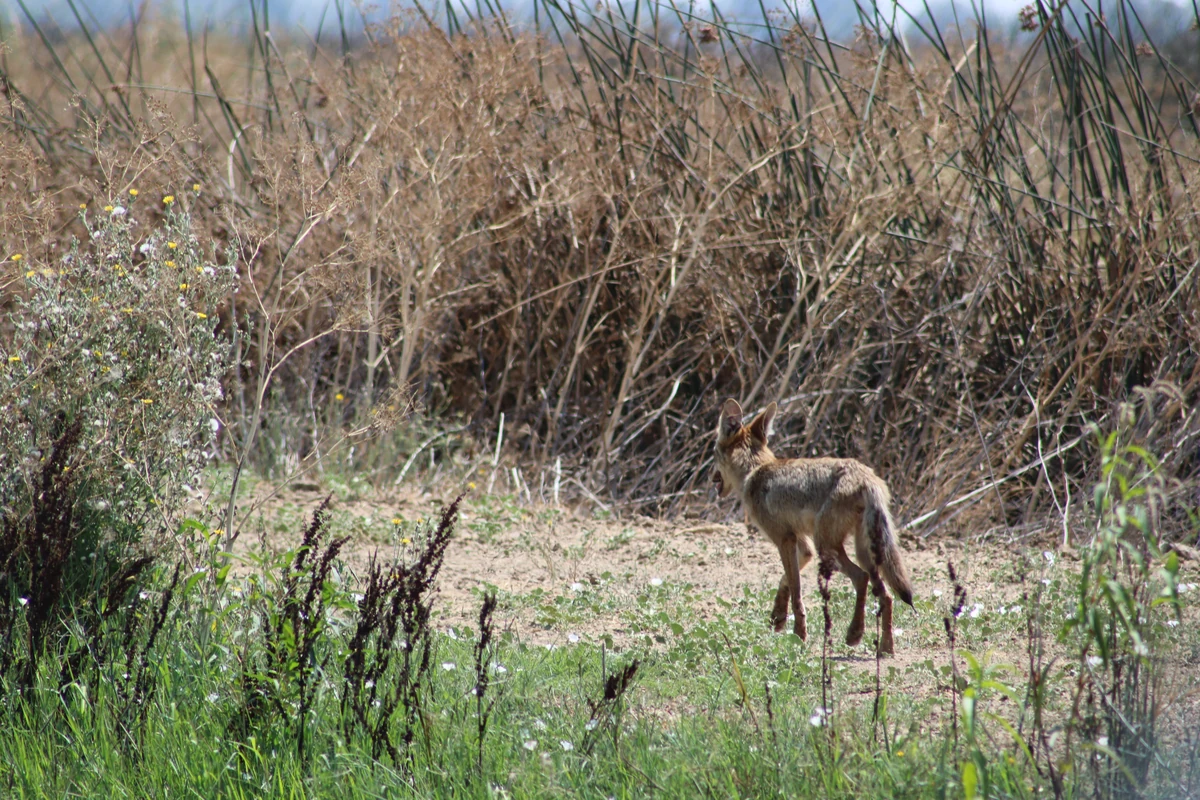
Both animals may travel alone or in groups, and both are capable, flexible hunters. In popular metaphor, however, the coyote invites reflection on improvisation, humor and unexpected lessons, while wolf imagery more often emphasizes belonging, shared direction, independence and distance. These are not exclusive biological traits or a classification of personalities.
If a challenge needs an inventive workaround, coyote symbolism might be an interesting lens. If it demands a commitment you repeatedly avoid, consider the social side of the problem instead. Our guide to lone wolf symbolism explores the difference between healthy independence and isolation. For another comparison centered on expression and voice, see blue jay spirit animal meaning.
What the coyote image can reveal about relationships
In relationships, cleverness can help you notice another person’s needs and adjust thoughtfully—or become an excuse to avoid direct answers. Independence can mean healthy personal space—or disappearing when a difficult conversation begins. Humor can lower the temperature of a tense moment—or become sarcasm that erodes trust.
For example, imagine someone who makes a joke whenever a friend asks for a commitment. They may be trying to lighten the mood, or they may be avoiding an honest no. The useful question is not whether that person has a “coyote personality.” It is whether the joke helped both people understand each other.
A practical coyote spirit animal reflection without superstition
- Describe the actual trigger. Was it a photograph, story, real animal, sound or dream? Avoid interpretation in the first sentence.
- Record your first reaction. Note curiosity, discomfort, delight, fear or admiration, without correcting yourself.
- Choose the relevant behavior. Adaptation, caution, vocal communication and family contact lead to different reflections.
- Test both sides of the metaphor. Are you resourceful—or avoiding the difficult long-term solution? Independent—or unnecessarily isolated?
- Make one ordinary decision. Ask a clarifying question, admit a mistake, improve a plan or set a respectful boundary. No prediction is needed.
This method is intentionally modest. Symbols do not measure a person’s character, forecast outcomes or replace evidence about someone’s actual behavior. A worthwhile interpretation should make your next choice clearer, not more fearful.
Coyote symbolism by context at a glance
| What stands out | Theme worth examining | What not to conclude |
|---|---|---|
| A lone coyote | Self-reliance, personal space | That coyotes avoid family bonds |
| A calling group | Communication, connection | That the calls predict an event |
| A coyote near a city | Flexibility when conditions change | That the animal chose you as an audience |
| A coyote in a dream | Emotion, memory, scene details | That a fixed dream code exists |
| A trickster story | Consequences, humor, blind spots | That every cultural story has one lesson |
| A coyote that seems wary | Attention, boundaries, caution | That animal wariness reveals your future |
Questions readers often ask
Is a coyote spirit animal a good or bad symbol?
Neither label is reliable on its own. A contemporary metaphor can emphasize useful adaptability or the danger of taking shortcuts. Your context determines which question is helpful. It does not reveal a hidden verdict about your future.
Does seeing a coyote mean change is coming?
Not as an evidence-based prediction. Coyotes adapt well to changing environments, so people may use them as a reminder to be flexible. That is a chosen comparison, not a forecast.
Are coyotes always solitary?
No. A coyote can forage or travel alone while remaining part of a pair or family group. National Park Service accounts describe both independent movement and social relationships.
What does a coyote howling symbolize?
As an optional metaphor, it can prompt reflection on communication, calling for connection or marking boundaries. Biologically, vocalizations are normal ways coyotes communicate.
Is a coyote the same as a wolf in symbolic meaning?
No fixed symbolic taxonomy exists. Modern writing often associates coyotes with improvisation and paradox, and wolves with group ties and independence. Actual animal behavior is more nuanced than either stereotype.
The most useful interpretation is the one you can test
The appeal of coyote spirit animal meaning lies in its ambiguity. The coyote can stand for an inventive response to pressure or the temptation to laugh away a serious responsibility. Rather than asking the symbol to decide for you, notice which side fits a real situation and choose a constructive next step. Insight becomes valuable when it changes what you do, not when it claims to know what will happen.
Sources and image credit
- National Park Service, Yellowstone — Coyote: adaptability, family groups, movement and vocalizations.
- National Park Service — The Coyote: diet, social behavior and wildlife safety.
- Iowa Department of Natural Resources — Coyotes: territory, vocal communication and social structure.
- U.S. Fish & Wildlife Service — Coyote in field: an additional wildlife photograph by Peter Eades/USFWS, public domain. The current coyote photos are separately credited with their sources and licenses.
Editorial note: The wildlife facts above are sourced to conservation agencies. The personal symbolic readings are expressly presented as interpretations, not scientific findings, medical guidance or claims about any particular Indigenous community’s tradition.
For a related guide, read Fox Spirit Animal Meaning: When Cleverness Has a Cost.
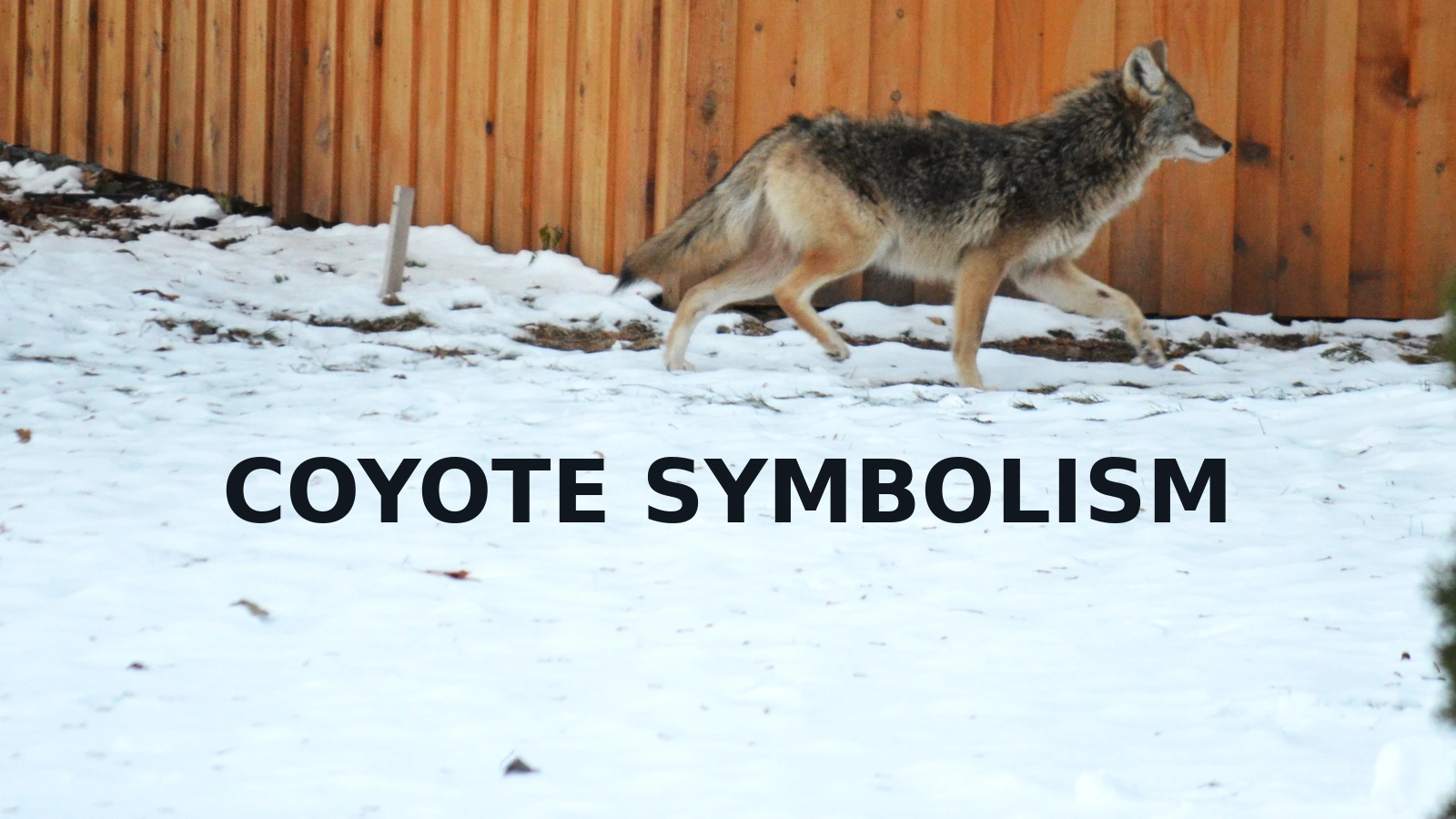
Cover photo: Mara Koenig/USFWS Midwest Region; original source; U.S. federal public domain. Cropped with an English headline; the stated license terms continue to apply.
For a related guide, read Birth Flower by Month: Find Your Flower and Its Meaning.